


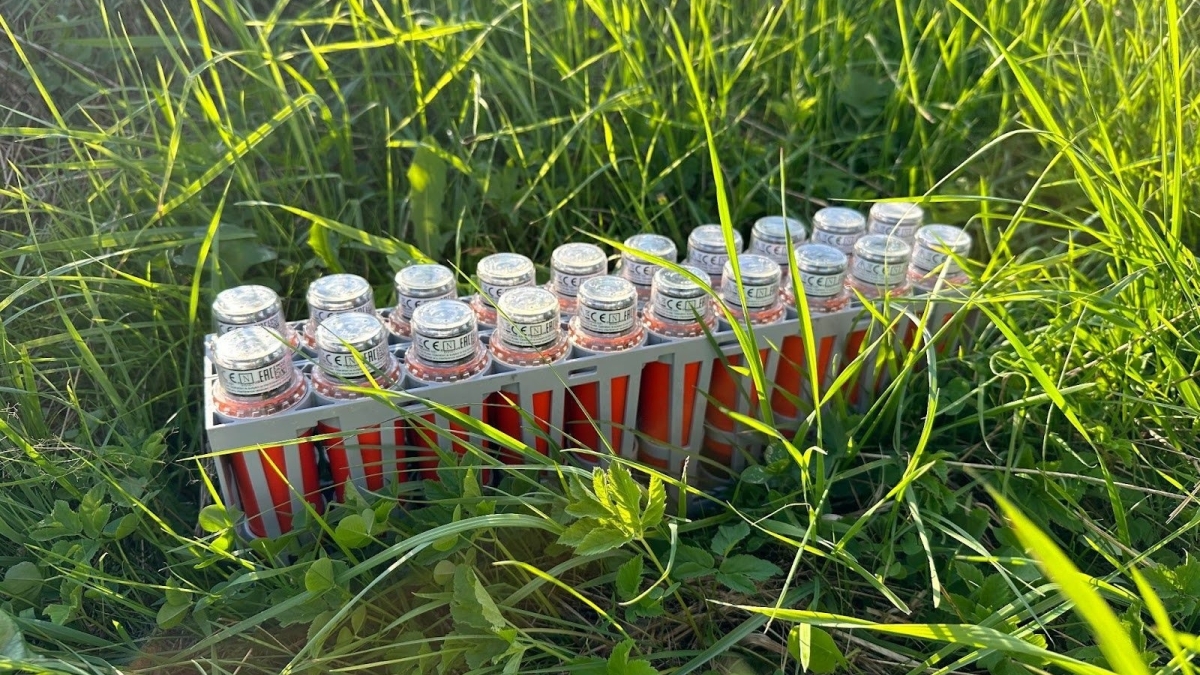
How Royal Society Industry Fellow Prof. James Hammond is working with STRYDE to expand the frontiers of seismic monitoring.
Technical publications and case studies showcasing James Hammond's work
Technical paper
High resolution soil moisture monitoring: the potential of large-N seismology
Read technical paperTechnical paper
Monitoring the Critical Zone with Ambient Seismic Noise Recorded on a Dense Nodal Array
Read technical paperCase study
Listening to Greenland’s melting ice to improve climate tipping-point forecasts
Read case studyProf. James Hammond and STRYDE have been awarded a prestigious Royal Society Industry Fellowship, enabling one of the world’s leading seismologists to work directly with STRYDE to advance what is possible in environmental seismology.
Spending 50% of his time embedded within STRYDE, Prof. Hammond is working in close collaboration with the team to advance seismic node technology and accelerate the development of new approaches to environmental monitoring.
Designed to foster long-term, high-impact collaboration between academia and industry, the fellowship ensures that scientific research is translated rapidly into practical innovation.
Through this partnership, academic insight is directly integrated into technology development, contributing to initiatives such as the UK’s Large-N Seismology facility (LeNS-UK) and helping shape the next generation of seismic solutions.
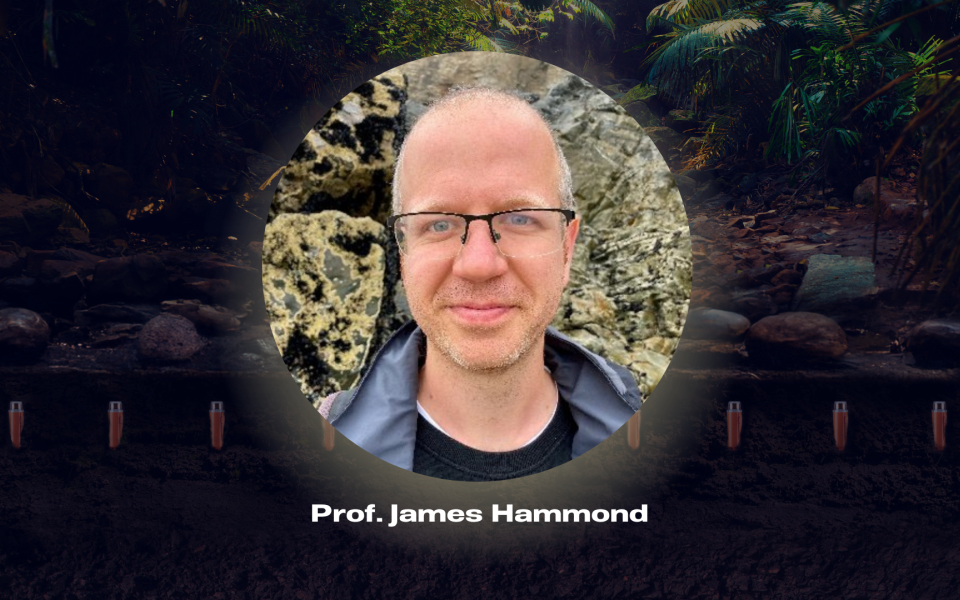

Prof. James Hammond
Birkbeck, University of London
STRYDE
2026–2030
How can we use seismic nodes to develop passive seismology methods to image and monitor the shallow subsurface and open new areas of environmental seismology?
How can we manage the large volumes of data to produce data products required by user demands?
Seismic nodes have revolutionised subsurface imaging in energy exploration, but their potential extends far beyond - opening up new applications that can benefit from the power of seismic technology, including environmental seismology.
Today, environmental scientists face two major barriers:
While dense “large-N” arrays can capture the Earth in extraordinary detail, their use in environmental applications has been limited by data complexity and technology constraints.
STRYDE’s affordable and ultra-lightweight nodal technology enables the rapid deployment of thousands of sensors, delivering:
This capability is already enabling breakthroughs in:
A major barrier to scaling environmental seismology is data. Continuous seismic monitoring can generate terabytes of data per month, far exceeding the capabilities of traditional workflows.
Through this collaboration, STRYDE and Prof. James Hammond are developing new approaches to make large-scale seismic data practical, usable, and accessible.
This includes:
Beyond data, the partnership is advancing seismic technology across key areas:
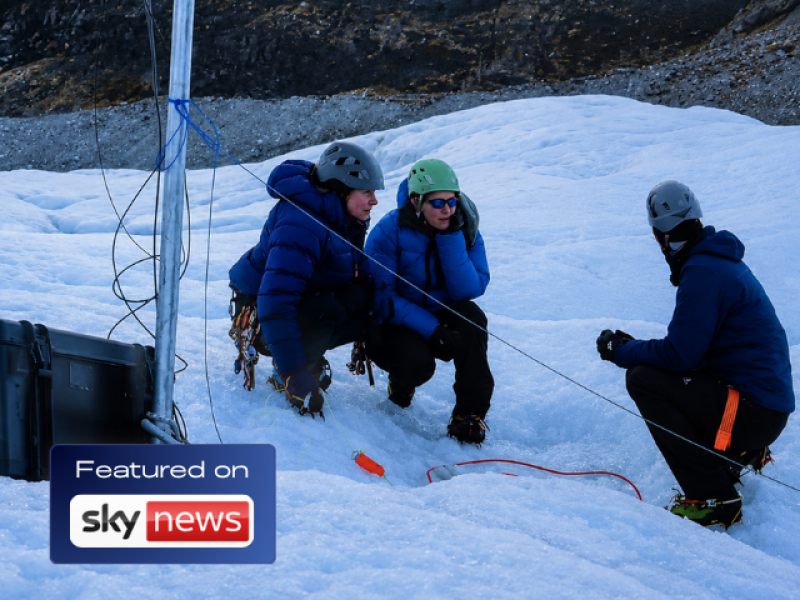
This seismology research project is one of several research projects that James Hammond will undertake during the fellowship, investigating new ways miniature seismic nodes can help scientists monitor glaciers, rivers, landslides and other changing natural environments.
The research was featured by Sky News on 23 July 2026, highlighting the potential relationship between melting ice, freshwater entering the North Atlantic and changes to the Atlantic Meridional Overturning Circulation, or AMOC.

Working with STRYDE, one of the world’s leading manufacturers of seismic nodes, Prof. James Hammond is leveraging both the technology and the company’s in-house expertise, including seismic specialists, geophysicists, and data processing teams, to expand seismology into new areas of Earth monitoring.
This collaboration supports his broader research ambition to establish a new research-led facility (LeNS-UK), enabling large-N seismology in the UK, while directly influencing the development of next-generation technologies tailored for environmental applications.
"As seismologists, we are adapt at using seismic waves to image the Earth at different scales. Working with STRYDE means we can now deploy thousands of sensors with a density not before possible.
It means we can image and monitor the Earth in new ways, potentially helping us study our changing planet in new ways."

Prof. James Hammond
Professor of Geophysics, School of Natural Sciences, Birkbeck University of London

In STRYDE’s Echoes from the Field podcast, our CEO, Mike Popham sat down with James to explore the growing role of high-density seismic in environmental seismology, examining how high-resolution subsurface data can help scientists better understand the Earth, monitor environmental change, assess natural hazards, and support more informed decision-making.