When access is constrained, safety is critical, and data quality can’t be compromised - STRYDE delivers.
Planning an onshore seismic survey in a modern world often means working around live infrastructure, restricted access, tight HSE requirements, and increasing cost pressure.
Traditional seismic systems were not designed for this reality.
STRYDE is - preserving image quality when seismic survey conditions aren’t ideal through low-cost, agile and discreet high-density seismic acquisition.

STRYDE enables seismic acquisition around live plants, pipelines, and access roads - without disrupting ongoing operations.
Discrete receiver placement outside exclusion zones
No cables blocking roads or access routes
Acquisition designed around existing infrastructure
Every additional vehicle movement, receiver deployment, and crew hour increases risk. STRYDE’s compact, cable-free nodes:
Reduce personnel and vehicle movements
Eliminate cable-related/heavy node hazards
Minimise time spent in high-risk areas
In access-constrained environments, source points are often the limiting factor. STRYDE shifts the acquisition strategy:
High-density receiver arrays (through low-cost nodes)
Improved sampling, fold, and illumination
Receiver-led designs that compensate for restricted source geometry
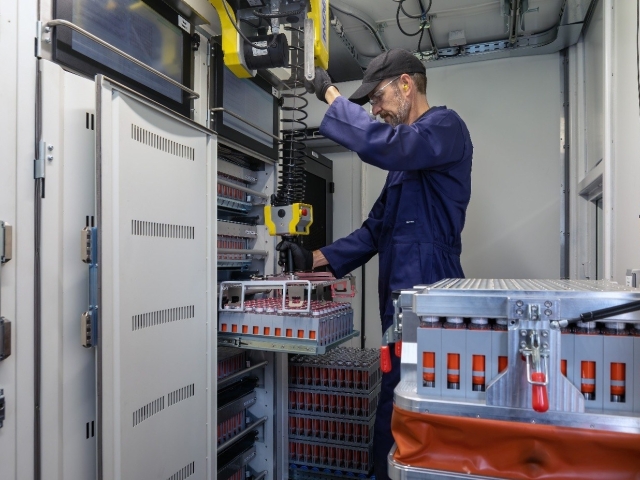
Expensive equipment, complex logistics and slow operations drive cost overruns and delays. STRYDE simplifies acquisition:
Smaller crews and fewer vehicles
Faster deployment and retrieval
Agile recording camp operations

In complex onshore environments where source access is limited, receiver density will determine data quality.
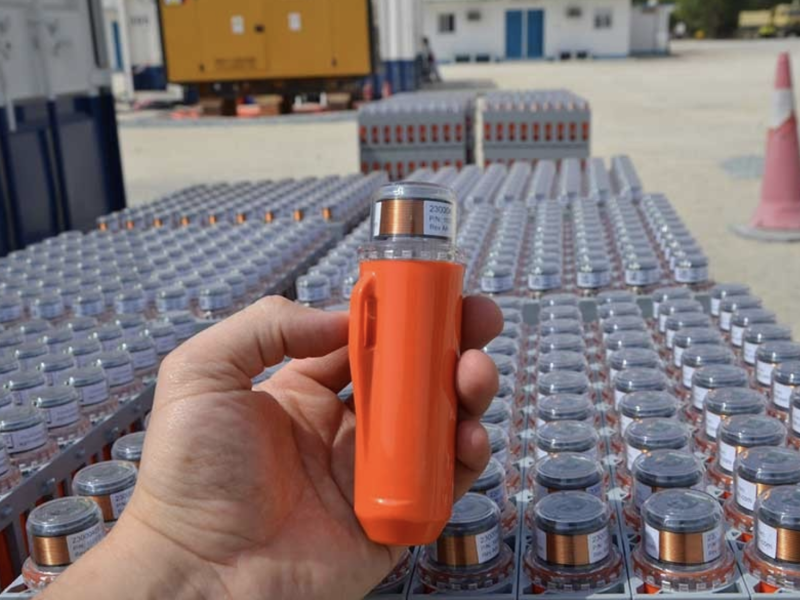
STRYDE nodes are the smallest, lightest and most affordable seismic receivers on the market today, enabling high-density seismic that:
Works within access constraints
Preserves subsurface resolution
Reduces operational risk
This is why receiver-led seismic has become the preferred approach for today’s most challenging onshore surveys.