


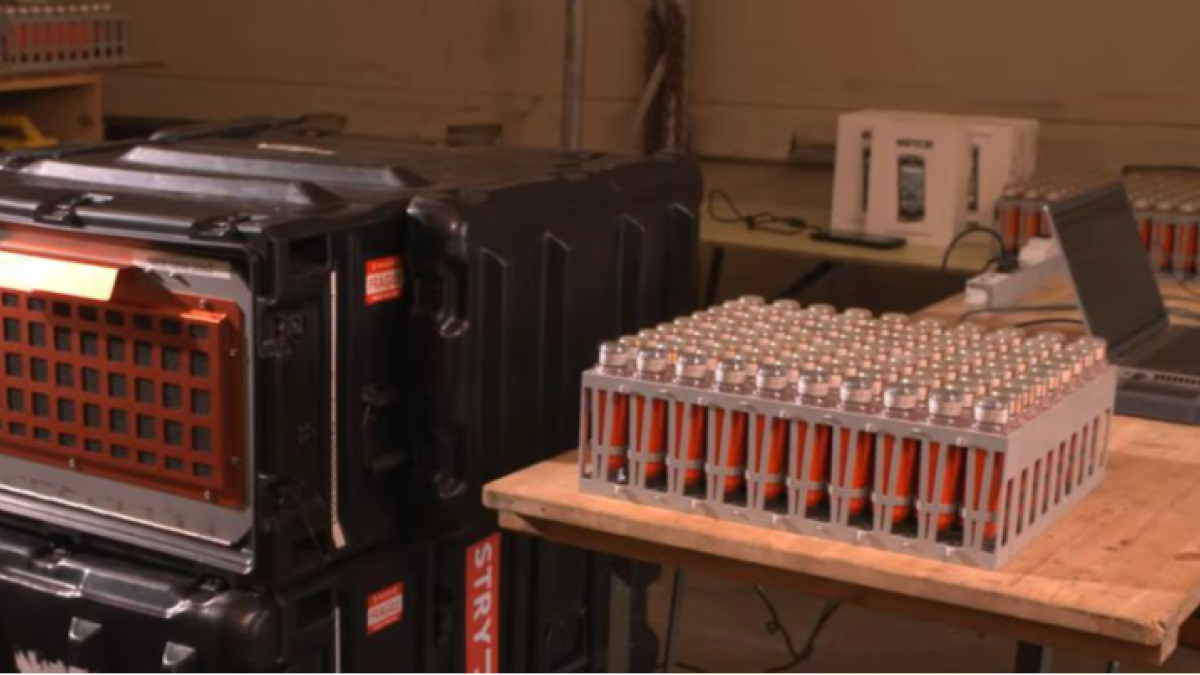
Book your slot:
at the AGU (American Geophysical Union) Annual Meeting 2025, taking place from December 15th to 19th 2025, in New Orleans, USA.
Wednesday 17th December 2025
1 hour time slots can be booked between 10am-4pm
The STRYDE Mini System has redefined what’s possible in small-scale subsurface imaging, empowering academics, researchers, and exploration teams to acquire high-resolution seismic data without the complexity, logistics, or cost barriers traditionally associated with seismic technology.
As the most compact and affordable seismic system on the market, the Mini gives organisations access to the kind of dense-channel, high-quality seismic data that was previously out of reach. Its ultra-lightweight, low-cost nodes and streamlined deployment workflows dramatically reduce project expenses - making it feasible for groups who historically lacked the budgets, equipment, or personnel required for conventional land seismic acquisition.
By removing these financial and operational barriers, STRYDE has empowered over 380 seismic projects since 2020, and has been used by over 30 Universities to acquire detailed imaging and better scientific insights.
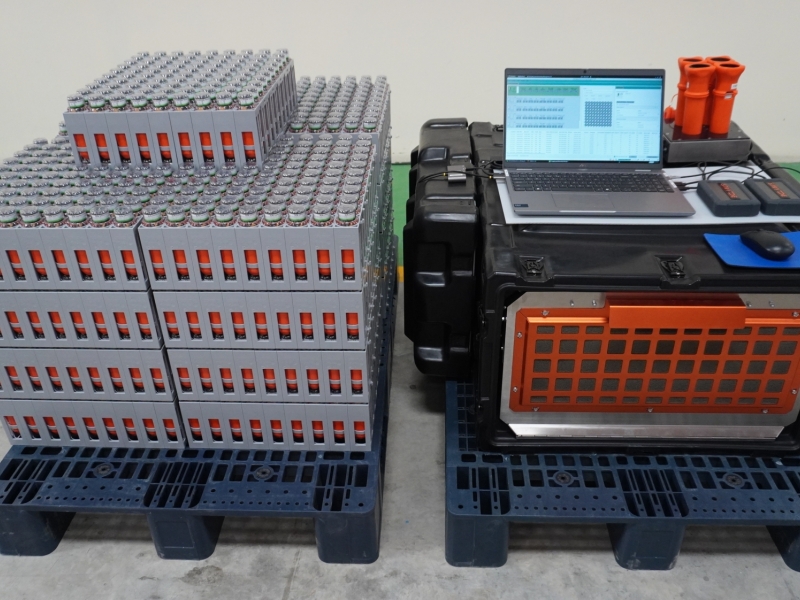
Join us for a fast, hands-on introduction to the STRYDE Mini Seismic System - a complete, portable nodal seismic solution built for small-to-mid scale land surveys (up to ~1,500 channels).
In this private session, in a private room at the AGU event venue, you’ll get a clear feel for what the system is, what it enables, and how a team uses it end-to-end, from deployment through to data harvest and deliverables.
Our Mini system is designed around ultra-lightweight seismic nodes and efficient workflows that remove the usual channel-count and logistics constraints of cabled or traditional nodal equipment. The result is faster field operations, smaller crews, and quicker access to high-density data.
Across the hour, we’ll guide you through four bite-sized parts:

A quick, visual walkthrough of the STRYDE Mini system and where it fits best: small-scale 2D/3D surveys, research projects, near-surface, infrastructure, environmental, and other land applications. We’ll outline the full operating concept and what makes STRYDE different in the field and back-in-camp.

You will handle the key components of the field kit, ranging from the world's smallest seismic nodes to the Initialization Devices and in-field node deployment and navigation system. We’ll demonstrate the deployment and retrieval logic, show what operators see on the tablet, and discuss practical field considerations (speed, roles, positioning, verification checks).

A look at how Mini users manage nodes and data after retrieval, including STRYDE’s high-throughput charge/harvest approach. We’ll cover how STRYDE uses wireless (induction) charging and optical data transfer to keep node rotation simple and efficient.

We’ll close with a clear, high-level view of what happens once data is harvested: QC checks, continuous records, and how deliverables such as receiver gathers are created using STRYDE’s software toolchain.
By the end of the demo, you should be able to:

Understand the full Mini-system workflow - prepare, deploy, retrieve, harvest, QC, deliver.
See how STRYDE enables high-density land seismic with minimal logistics, thanks to small, light nodes and streamlined node handling.
Get a practical feel for field operations using Navigator and the role of each piece of equipment.
Learn where Mini is the best fit and how it scales into STRYDE’s wider STRYDE Nimble and Pro ecosystems.
These sessions are ideal for anyone evaluating or planning land seismic work who wants a real-world sense of STRYDE operations without a full field trial.
The goal is to let you deep dive into the system and ask our experts any technical questions you want the answer to, in a small group setting.