


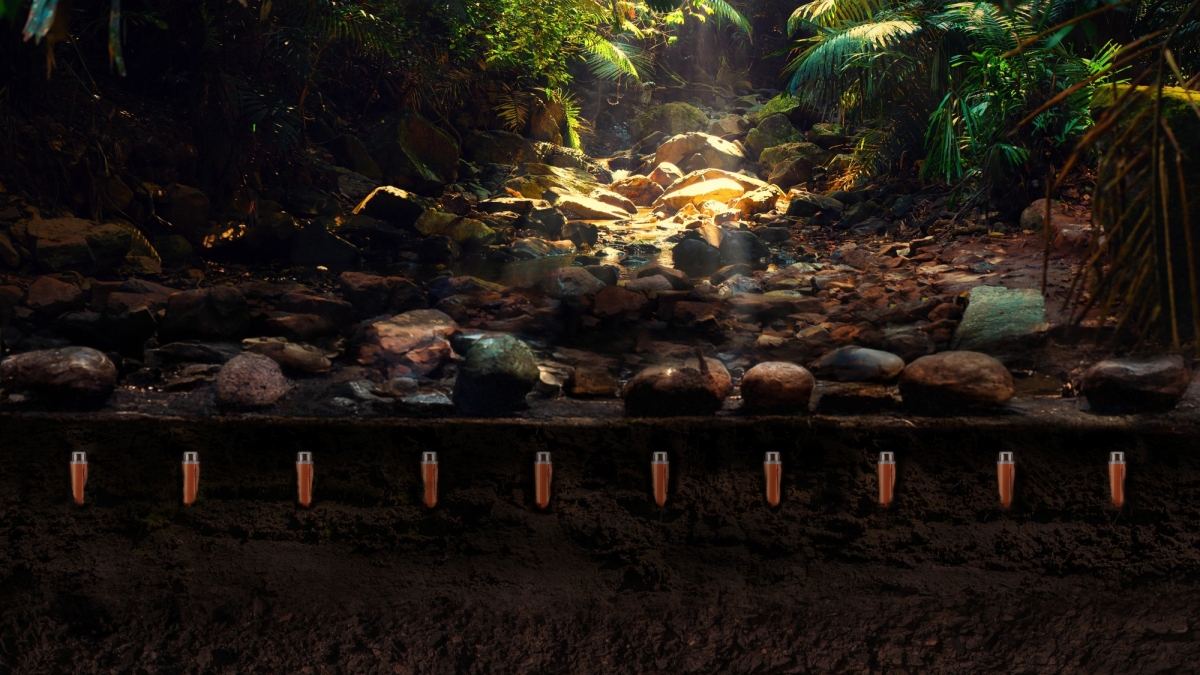
Discover the latest seismic technology for high-resolution imaging of complex geology

From dense jungle environments to marshy landscapes, at STRYDE, we help companies acquire high-density seismic data with state-of-the-art nodal technology and data processing solutions.
We’ve brought onshore subsurface imaging out of the dark ages for companies operating in the Latin America oil and gas sector seeking to:

Traditionally, onshore seismic data in Latin America has been acquired through complex cabled geophones or large nodal devices that are restrictive, inefficient and expensive technology for conventional and high-density seismic acquisition.
The use of miniature, low-cost nodal devices like STRYDE’s Nodes™ enables companies to deploy significantly more receiver devices, efficiently, at an affordable price point.
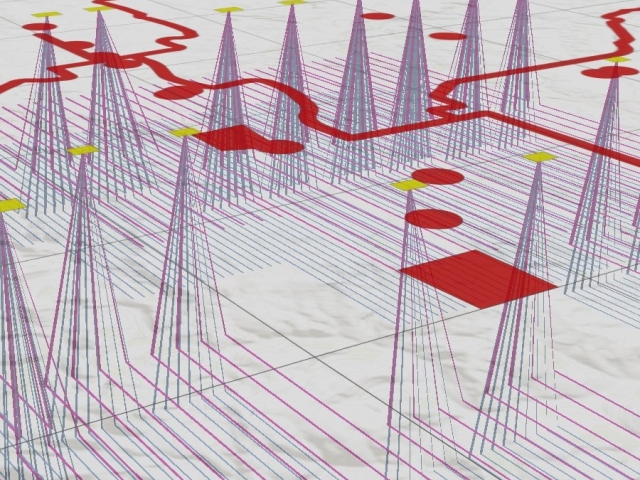
This results in denser seismic and elimination of blind spots, helping fast-track and better reconstruction of the subsurface image during processing to deliver a high-resolution seismic images.
Exploring for energy and mineral resources across Latin America and the Caribbean requires seismic technologies capable of operating efficiently in remote and environmentally sensitive environments. High-resolution seismic data is essential for accurately imaging complex subsurface geology and reducing exploration risk. However, traditional land seismic systems are often bulky, expensive, and logistically challenging to deploy in dense jungles, mountainous terrain, and areas with limited infrastructure.
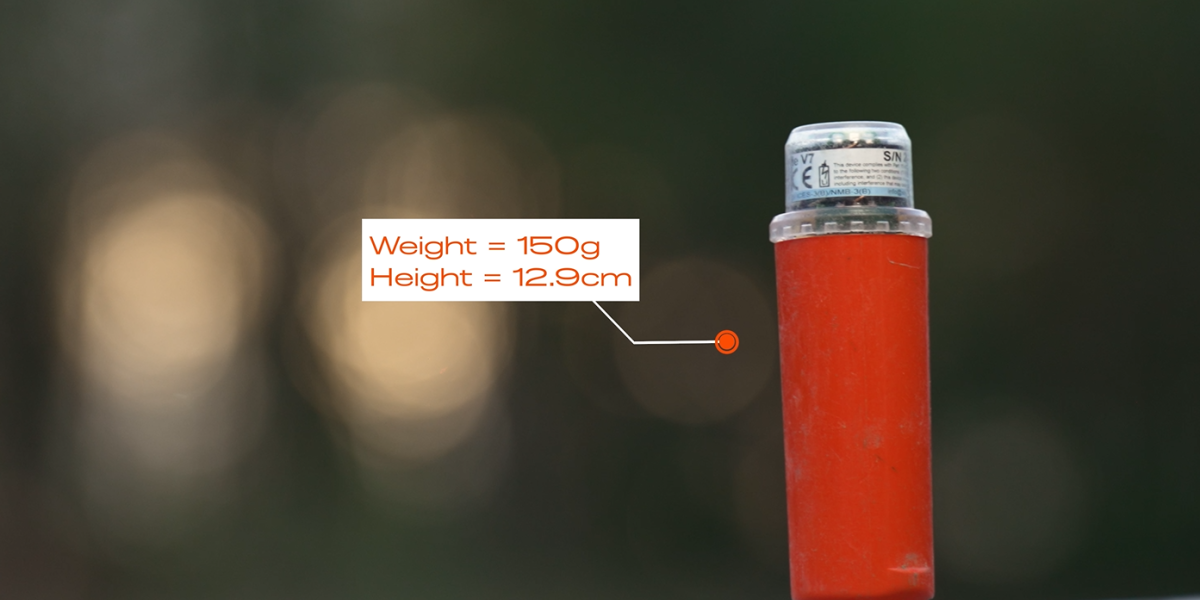
STRYDE is transforming land seismic acquisition. We have developed the world’s smallest, lightest, and most cost-effective autonomous seismic receiver technology, designed to enable high-density seismic surveys in even the most challenging onshore environments.
STRYDE nodes allow operators to efficiently acquire ultra-high-resolution seismic data across forests, mountains, and remote regions. Their compact and lightweight design simplifies logistics, reduces environmental impact, and accelerates deployment, enabling higher-quality data acquisition while lowering operational costs across exploration projects in Latin America and the Caribbean.
The first deployment of our seismic system in Bolivia with SERVIPRO Servicios Geofísicos! Not only did the crew comment on how easy and quick our nodes were to deploy across challenging terrain, but they were also extremely impressed with the quality of the data acquired.

Almost 23,000 nodes been deployed across challenging terrains in Southern Mexico, delivering unparalleled seismic surveying and imaging for oil and gas exploration and reservoir optimisation initiatives for Servicios Sísmicos de Exploración and SeisGlobal Geoservices.

"Out of all the STRYDE Nodes™ we have deployed and retrieved in the last 24 months, we have lost less than 0.4% of the data (>99.6% data recovery).
On one project, with over 19,000 nodes deployed for 4 weeks, we recovered 100% of the data - every sample from every trace."
President, Explor


Learn more →

Learn more →

Learn more →
Learn more →

Fully sampled, high-resolution image uplift, to pinpoint opportunities and de-risk drilling decisions

Significantly reduced seismic survey costs

Fast-track seismic imaging to get access to interpretation ready seismic sooner

Optimize seismic crews and reduce exposure to HSE risk

The only feasible solution for high-density seismic surveys

Increased sort-domains for noise attenuation
Discover how seismic surveys differ depending on the type of seismic sensor used. Here we show how nodal seismic sensors compare to cabled geophone arrays for a 3D seismic survey in a desert environment.
Our latest case studies, news, videos, blogs and technical papers...

Susan Nash, AAPG's Director of Innovation and Emerging Science and Technology interviewed STRYDE's Head of Business Development - LATAM, Victor Villamizar, to uncover more about some of the reasons why STRYDE's nodal technology is making seismic acquisition cheaper, easier, and less environmentally damaging than in the past.
Learn more

Learn how STYRDE enabled DNO to complete a “faster, cheaper and safer” seismic survey in Northern Iraq...
Learn more

With increased environmental, financial, and geological risks related to fracking, understanding the reservoir’s characteristics and production capability makes a significant difference between a cost-effective and successful hydrocarbon extraction, and one that leads to poor production and completion headaches, and ultimately wasted spend.
Learn more

Watch the world's largest nodal survey (166,000 channels), acquiring high-resolution seismic data, in a way that has never been done before.
Learn more

A case study demonstrating how STRYDE technology was used to conduct a microseismic seismic acquisition to help hydraulically fracture a horizontal well.
Learn more

In this blog, Kevin discusses some of the top operational challenges associated with the use of cable-based systems and offers practical methods and advice to help overcome these
Learn more

In this blog, Chris discusses the common challenges associated with achieving survey design excellence and offers insights and advice for designing an efficient and effective seismic survey.
Learn more