


CCUS
AGU 2025 Poster
Sadia Marium Rinty, Andrew Delorey, Thomas H. W. Goebel
Research group: Center for Earthquake Research and Information, The University of Memphis, National Security Earth Sciences (EES-17), Los Alamos National Laboratory.
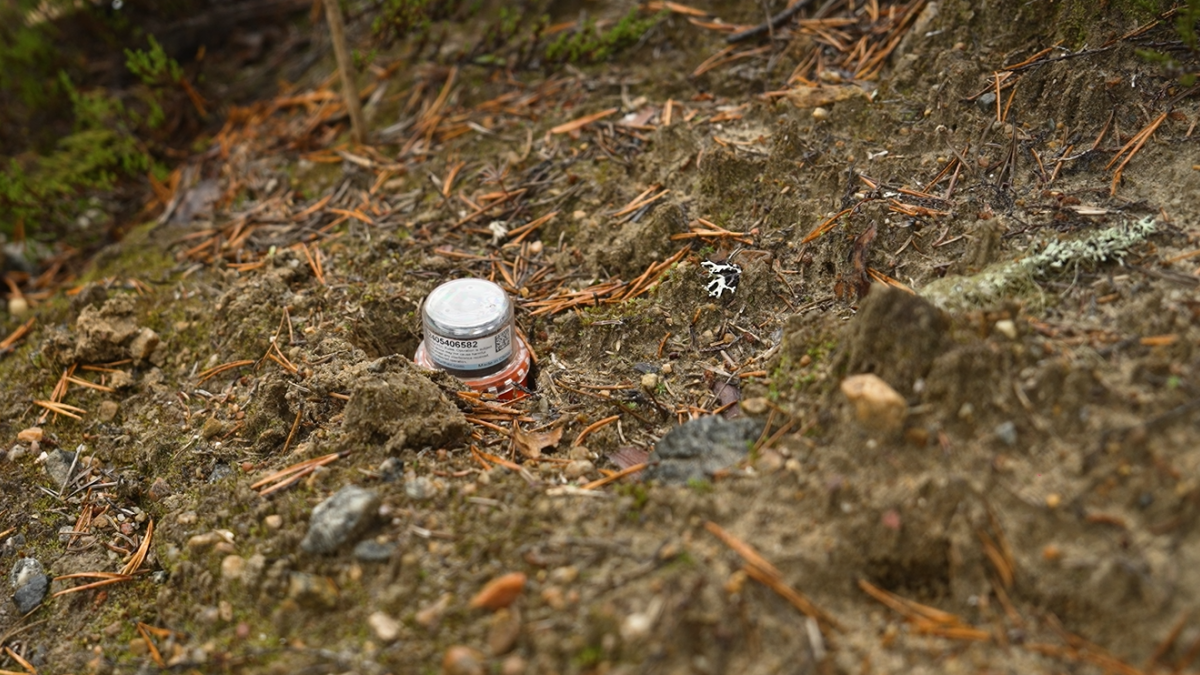
This study uses an industry dataset of 1,800 seismic nodes deployed over 30 days to detect potential seismic activity in a region with CO₂ sequestration potential. The objective was to assess the feasibility of monitoring low-magnitude seismicity using a dense nodal array in a challenging, industrial environment.
The dataset revealed strong opportunities.
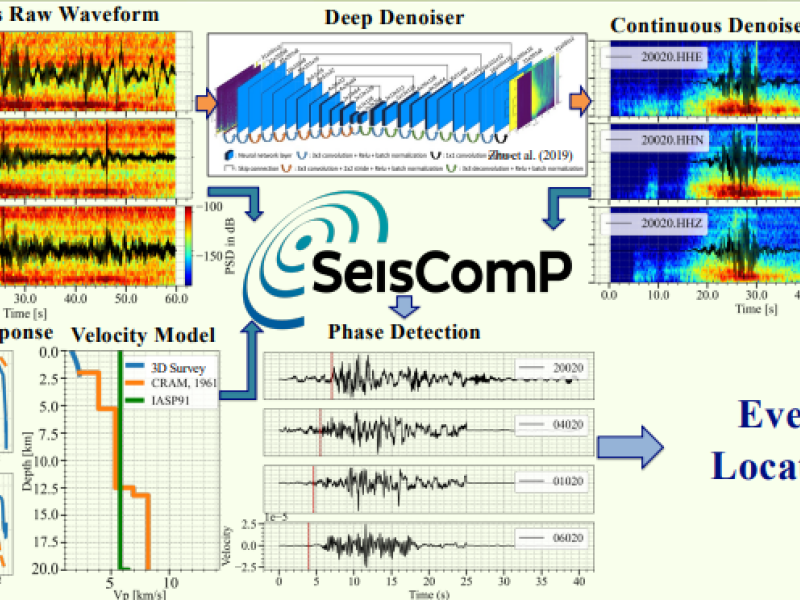
Deep-learning-based denoising showed promise in enhancing signal clarity, while the large-N nodal configuration enabled stacking techniques to amplify coherent seismic energy. Together, these approaches demonstrate the potential of dense nodal arrays for seismic monitoring in CO₂ storage applications.
This fully integrated seismic acquisition system is a rapid-deploy, plug-and-record solution that empowers crews to acquire high-density data in record time.
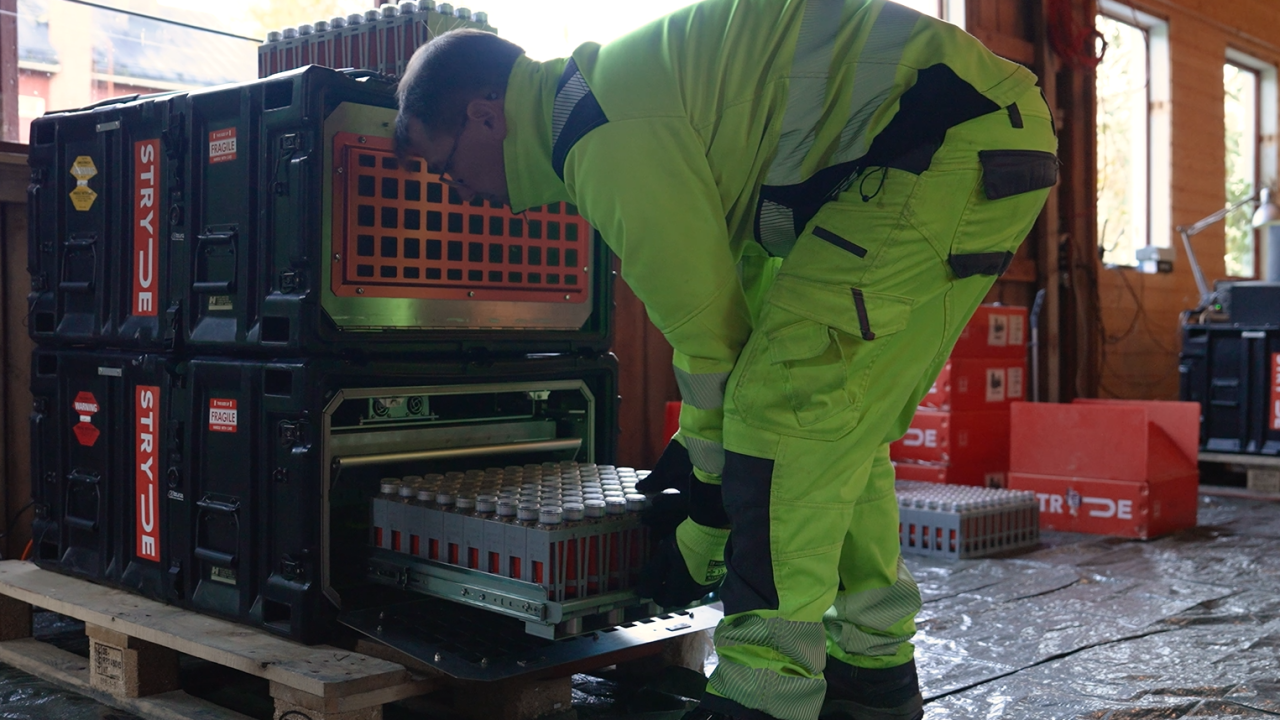
the most powerful node ecosystem available in the industry today
up to 6 charge and harvesting nests can be attached to the system
allowing 3,240 nodes to be charged and harvested in 24 hours
with only 1 operator required for node recording operations