



By Sam Moharir, STRYDE
As India ramps up onshore energy exploration in 2025, demand for efficient, scalable, high-resolution seismic acquisition is at an all-time high.
Conventional land seismic methods, while well-established, often face constraints around flexibility, operational efficiency, and data quality, especially in areas with complex geology and infrastructure limitations.
To meet these modern demands, STRYDE is pioneering a shift toward a modular approach to nodal seismic acquisition. The STRYDE Nimble Seismic System is engineered to accelerate seismic data acquisition while offering agility across varied environments. Built around the principle of operational efficiency at scale, it marks a significant departure from the limitations associated with bulkier nodal seismic systems and cabled geophones.
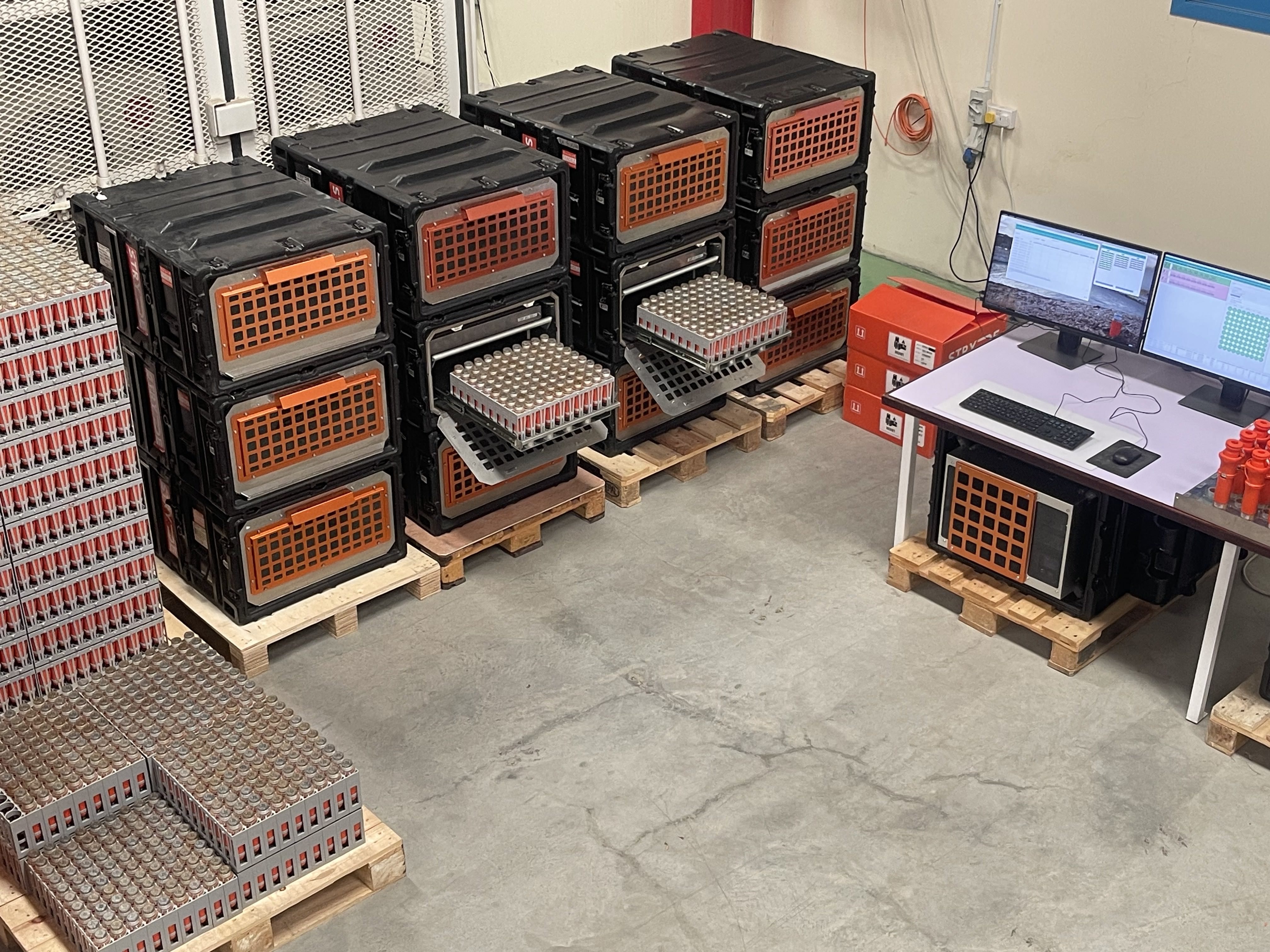
A modular approach to seismic acquisition
While modularity is not new to seismic acquisition, STRYDE’s Nimble System differentiates itself through full ecosystem integration, from bulk node charging and download, to data QC and final data delivery.
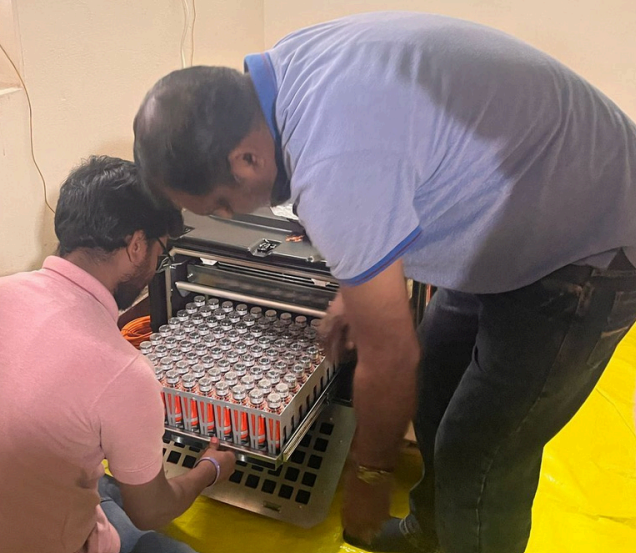
At its core lies a design that is centred around batch handling, rather than individual handling of nodes, allowing trays of 90 nodes to be charged and downloaded simultaneously. This contrasts with the node-by-node handling required by all other nodal systems on the market today. This 90-fold increase in efficiency reduces man-hours, streamlines camp operations, and cuts both capital and operational expenditure. These Compact, high-capacity charging and harvesting Nests minimise the physical footprint of camp infrastructure, enabling seamless scale-up without logistical bottlenecks.
Wireless inductive charging and optical data download eliminates the need for exposed connectors, enhancing the durability and performance of STRYDE nodes in harsh field conditions. The use of short-range, interference-free, optical data transmission ensures trays of STRYDE nodes can be connected to download racks very quickly for highly reliable data download regardless of the channel count.
Other nodal systems use either wired or radio-based data download, both of which become increasingly impractical and unreliable as channel counts scale.
A step change in field operations
STRYDE’s field philosophy is grounded in ergonomic, low-impact deployment. Lightweight nodes and deployment accessories allow teams to operate efficiently on foot, even in infrastructure-dense, environmentally sensitive, or remote terrain.
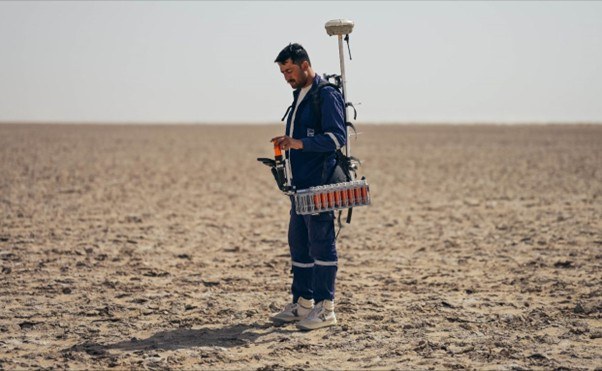
Purpose-designed deployment backpacks facilitate hands-free navigation to pre-plotted positions and enable easy node transport, replacing the improvised methods still relied upon by other node providers, which slow down field operations, lack proper ergonomics, and increase the chance of equipment damage.
The result: streamlined operations that require fewer personnel and vehicles - translating into cost savings, faster execution, and reduced health, safety, and environmental exposure.
Transforming seismic camps through automation
Seismic base camps have long been labour-intensive environments. STRYDE has reformed this with a semi-automated, production-line workflow delivered through our high-capacity Nimble Seismic System with capability to handle up to 30,000 nodes.
Equipped with between one and six charge/download Nests, the Nimble System can be sized to your project requirements, allowing up to 3,240 nodes to be cycled per day with a single operator.
The system is supplied with recording system compute and data storage hardware. Intuitive, purpose-built, and scalable software allows efficient and effective data management and QC by a single operator, even for the largest nodal operations.
This system eliminates the need for sprawling support camps, reduce manual handling, and drastically cutting personnel requirements. All operations are executed tray-by-tray, mitigating the risks and inefficiencies of node-level interaction.
STRYDE in India
The operational advantages of STRYDE’s Nimble System have been put to the test during multiple Oil and Gas and Mineral Exploration projects in India, comprising of both 2D and 3D seismic surveys in India.
A STRYDE seismic system user, Santhosh Kumar Peapaly, Director of AGS Geophysical Services India Pvt. Ltd., India, shared his experience of the technology:
"We are well-versed in the operational and data quality benefits the STRYDE nodal system offers. The use of STRYDE nodes on this survey has allowed us to design and acquire a high-density dataset with smaller crews, fewer vehicles, reduced logistics, and within a compressed timeline.
Delivering high-quality data to our customers is our utmost priority, and we take pride in achieving this with unparalleled efficiency and precision."
Beyond delivering high-density seismic data, STRYDE’s system helped their customers significantly reduce CO₂ emissions, streamline logistics and enhance worker safety. All of which are aligned with modern environment, social and governance (ESG) mandates.
Minimizing Impact on India’s Communities and Environments
In India, where seismic exploration often takes place near villages, farmland, and sensitive ecosystems, minimizing disturbance and chance of equipment theft is critical. Traditional operations can disrupt daily life, strain relationships with local communities, and face delays from environmental and infrastructure constraints.
STRYDE’s miniature, cable-free nodes that are small enough to be buried discreetly - offer a low-impact alternative and reducing the chance of data loss associated with equipment theft.
Their compact size and lightweight design mean deployment can be done entirely on foot, without heavy vehicles or equipment. Combined with STRYDE’s minimalist camp setup, this dramatically reduces environmental footprint, operational time on site, and community disruption.
By removing the need for large fly camps and complex logistics, STRYDE not only cuts permitting and mobilisation costs but also supports smoother regulatory compliance and helps operators maintain their social license to operate, a vital advantage in India’s exploration landscape.
Supporting India’s Strategic Energy and Mining Ambitions
STRYDE’s scalable seismic technology is a key enabler in advancing the strategic priorities of India’s National Oil Companies (NOCs), International Oil Companies (IOCs), and mining operators.
For Indian NOCs, STRYDE enables long-term exploration programs while minimising disruption to local communities and sensitive environments. Its agile system can be rapidly deployed by local teams, supporting knowledge transfer and workforce upskilling while ensuring operational efficiency.
For IOCs and mining companies operating in India’s frontier or infrastructure-constrained regions, STRYDE delivers the agility to mobilise quickly, reduce overheads, and accelerate decision-making cycles. By providing dense, affordable seismic data, the technology enhances understanding of the subsurface, whether to de-risk hydrocarbon joint ventures or to identify and evaluate mineral resources essential for India’s energy transition.
The Future of Seismic is Discreet and Fast
As India accelerates its pursuit of energy security and critical minerals to fuel economic growth and the energy transition, the demand for faster, cleaner, and more cost-effective exploration is increasing.
STRYDE is redefining what’s possible in seismic and subsurface imaging with technologies that combine miniaturisation and workflow automation. This innovation enables rapid insights while minimising environmental footprint, reducing costs, and lowering disruption to communities.
In India’s rapidly evolving resource sector, where efficiency, high-quality data, and ESG compliance are vital for regulatory alignment, community trust, energy self-reliance, and advancing the nation’s critical minerals strategy - STRYDE’s Nimble Seismic System delivers more than just data acquisition. It provides a transformative blueprint for the future of exploration across India’s oil, gas, and mining industries.