


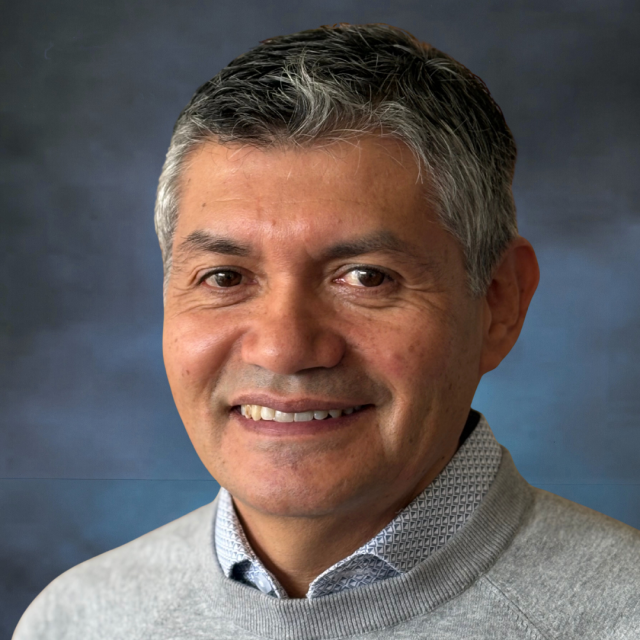
We are delighted to welcome Jose Olaya to STRYDE, where he will be helping companies across Latin America and the Caribbean access high-quality seismic data faster, more efficiently, and at a lower cost.
Jose brings more than 25 years of experience in land seismic data processing, with a career spanning some of the world’s most technically demanding environments, from the Andes and the Zagros Belt to the deserts of the Middle East and the permafrost of Alaska. His deep expertise in complex land imaging, velocity model building, and high-density seismic acquisition makes him a valuable addition to the STRYDE team as we continue to expand access to affordable, scalable nodal seismic technology.
We caught up with Jose to learn more about his experience, the challenges he has seen across land seismic, and what excites him about the future of the industry.
Could you share a short summary of your experience to date?
I have spent more than 25 years working in land seismic data processing. My career began in Colombia in the late 1990s, working in the seismological field as a junior researcher, where I built tomography models for earthquake location studies. I then moved into onshore seismic acquisition services as a geophysicist and seismic processor.
Throughout my career, my focus has always been on challenging land datasets, particularly areas with poor signal-to-noise ratio, strong statics, and complex imaging problems. I have worked extensively in thrust belt environments across the Andes, including Colombia, Bolivia, and Peru, as well as in the Zagros Belt in Kurdistan, the Carpathians in Romania, and Papua New Guinea. I have also worked in desert environments across Saudi Arabia, Algeria, and Libya, and in permafrost conditions in Alaska.
At companies including Saudi Aramco, Repsol, and TBI, I have led seismic processing teams, developed PSTM and PSDM velocity model building workflows, and worked closely with subsurface teams to ensure seismic data is delivered with the quality and timing needed for exploration and reservoir characterization.
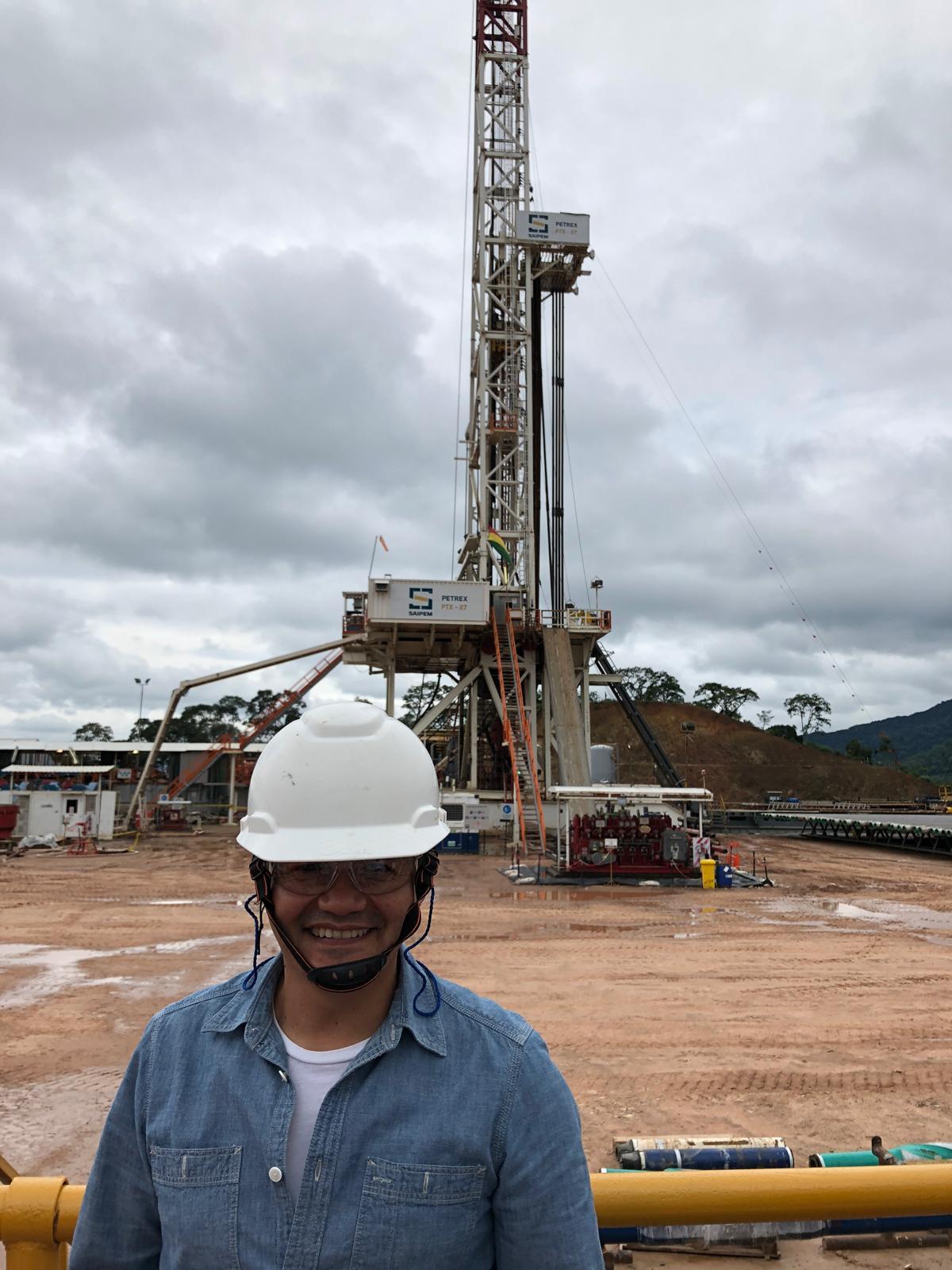
You’ve worked everywhere from the deserts of the Middle East to the foothills of Latin America. What is the most common land seismic challenge you have seen consistently, regardless of terrain or environment?
The most consistent challenge is optimum wavefield sampling.
In every land environment, there is a need to balance the cost of an efficient seismic acquisition programme with the technical requirement to avoid spatial aliasing and meet the Nyquist criteria. In practical terms, this means designing surveys that are cost-effective while still capturing enough information to deliver high-quality imaging.
Regardless of whether you are working in deserts, foothills, thrust belts, or permafrost, the same fundamental question always appears: how do we acquire the right amount of data, with the right sampling, at the right cost, to produce an image that supports confident subsurface decisions?
The industry is pushing toward higher-density, nodal acquisition. What excites you most about where land seismic is heading?
High-density recording and nodal acquisition are changing the paradigm for land seismic. They are helping the industry make seismic acquisition both cheaper and better.
From a receiver wavefield sampling perspective, nodal systems represent a significant step forward. Deploying and retrieving receivers is generally more cost-efficient than increasing seismic source effort, and the availability of lightweight, autonomous nodes makes it much easier to acquire denser datasets in challenging environments.
Another exciting development is that today’s processing algorithms and computing capabilities allow us to handle much larger seismic datasets than before. When this is combined with high-productivity acquisition methods such as ISS, DS3, and DS4, it opens up a wide range of possibilities, not only for oil and gas, but also for CCUS, geothermal, and mining applications.
Looking further ahead, I believe longer offsets and receiver sensors with wider frequency response will become increasingly important. Reflected-wave FWI is not yet fully available for land seismic in the way the industry would like, but the direction of travel is clear: better sampling, broader bandwidth, longer offsets, and more powerful imaging.
What is a moment in your career where high-density data completely changed the subsurface story?
I recently participated in a project where high-density 3D seismic acquisition was used to successfully image a sub-thrust target.
The new survey used high-density recording with a 15 m x 15 m bin size and maximum offsets of 12 km. The legacy dataset was a much sparser 3D seismic cube with a 30 m x 30 m bin size. The difference was significant.
Using RTM imaging, the new data changed the interpretation of the structure and had a direct impact on the well prognosis. It was a clear example of how better sampling and high-density acquisition can fundamentally change the subsurface story, especially in complex geological settings.
You recently joined STRYDE. What stood out to you about what we are doing?
What stood out to me was STRYDE’s smart approach to producing a fully scalable nodal seismic system.
The technology helps reduce the cost of seismic operations through lightweight equipment, smaller node size, and autonomous capabilities. This is especially important for land seismic, where logistics, terrain, and operational complexity can have a major impact on project cost and efficiency.
For Latin America and the Caribbean, I see a strong opportunity to help companies acquire high-quality data faster and at lower cost, particularly in areas where traditional seismic acquisition has been too expensive or too difficult to justify. STRYDE’s system has the potential to make better seismic data more accessible across a wider range of applications and markets.
Welcome to STRYDE, Jose
Jose’s experience across complex land environments, his deep technical knowledge of seismic processing and imaging, and his understanding of the Latin American market make him a fantastic addition to the STRYDE team.
As demand grows for faster, more affordable, and higher-quality subsurface imaging, Jose will play an important role in supporting companies across Latin America and the Caribbean as they unlock the value of high-density seismic data.
We are excited to have him on board and look forward to the impact he will make.