


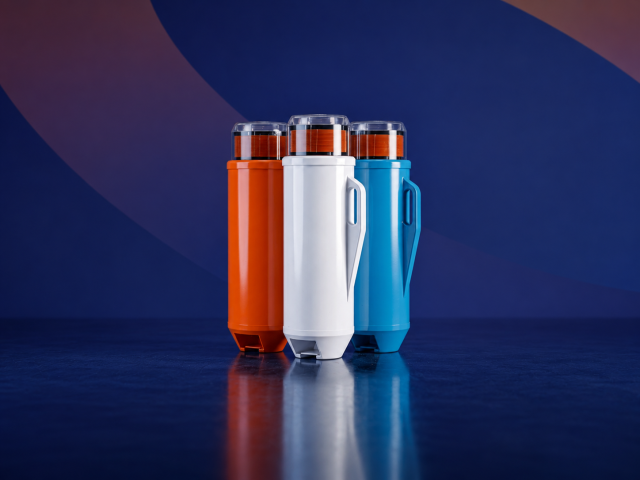
STRYDE, the market-leading provider of land seismic nodal technology, has launched Halo, a new family of seismic nodes designed to give explorers greater choice, flexibility and confidence across increasingly complex land survey environments.
Launched on 9 June at the EAGE Annual Conference in Aberdeen, the Halo range delivers high-fidelity imaging, enhanced operational assurance and connected acquisition at a low cost, while retaining the simplicity and scalability STRYDE technology is known for.
In 2019, STRYDE entered the market with a clear ambition: to make high-definition onshore subsurface imaging accessible to any industry. Its smaller, scalable and more affordable nodal system challenged long-held assumptions about how surveys are designed, how nodal systems are deployed and who they can help.
Since then, STRYDE’s technology has been deployed by crews, contractors, operators and geophysicists around the world, enabling higher channel counts, faster deployments, improved logistics, safer operations and new high-density survey designs. In 2025, STRYDE announced that it had become the market-leading provider of nodal technology by volume, with well over one million nodes delivered globally.
Halo represents the next step in that journey.
Developed in direct response to customer feedback and field experience, the new product family comprises Halo Classic, Halo Connect and Halo Chrono+. The range enables survey operators to select and combine node technologies according to project requirements, environmental conditions and acquisition priorities, while remaining compatible with STRYDE’s existing seismic system hardware and software.
The Halo family has been designed to address three major challenges facing the land seismic industry: the need for greater choice around real-time QC and communications, improved time synchronisation in extreme land environments, and higher-fidelity imaging across both shallow and deep targets.
As land seismic acquisition has shifted increasingly towards autonomous acquisition, operators have unlocked significant efficiencies in the field. However, for some projects and end clients, wireless communication and in-field QC remain essential. Halo Connect and Halo Chrono+ address this by adding in-field wireless QC functionality and communications.
Halo Chrono+ also supports improved time synchronisation in challenging land environments where GNSS performance can be limited, including marshland, jungle, urban and swamp settings, helping operators acquire high-quality seismic data with greater confidence in the harshest environments.
Across the range, Halo introduces a wider frequency response to support improved imaging for near-surface investigations and deeper resource exploration, reflecting the growing use of high-density seismic across a wider range of industries and applications.
Mike Popham, CEO at STRYDE, said:
“The launch of Halo marks a major milestone for STRYDE and for the wider land seismic industry. When STRYDE launched, our ambition was to make high-definition subsurface imaging more accessible. Since then, our customers have taken the technology into places and applications that have exceeded even our own expectations.
We have listened closely to our customers, and the message was clear: they wanted the same simplicity, scalability and efficiency STRYDE has brought to the market, but with more choice, fewer compromises and greater confidence in challenging environments.
Halo is our answer to that. It is not just one new product, but a new family of seismic nodes that enables customers to choose the right technology for the right survey. Operators no longer have to take a one-size-fits-all approach. They can deploy a mix of nodes within the same survey, combining autonomous acquisition, wireless QC and enhanced timing capabilities depending on what their project requires.”
Halo is backed by successful field deployments across multiple regions and developed around direct customer feedback, reflecting STRYDE’s continued focus on delivering practical innovation for the seismic industry.