


Civil engineering
On the ground with Fugro Egypt
Hands-on training and field support for a passive seismic survey at a major construction project in Egypt.
Preparing for seismic acquisition takes more than having the right equipment on site. It requires a confident crew, practical workflows and the ability to adapt to local conditions.
STRYDE field support expert Bogdan joined Fugro Egypt to help its crew get up and running on a passive seismic survey in Egypt. From system setup and node preparation to deployment and data delivery, he worked alongside the team to establish an operation suited to a challenging coastal construction environment.
Shallow subsurface investigation for civil engineering
Across 20 survey lines
Approximately 3.28 km of survey lines
Per deployment, with same-day retrieval
Recording ambient seismic energy without an active source
Including an independent contractor surveyor
Morning deployment, afternoon retrieval and evening data harvesting
The STRYDE field geophysicist on site with Fugro
The survey aimed to evaluate shallow basement conditions to support civil engineering work associated with the large and complex construction project.
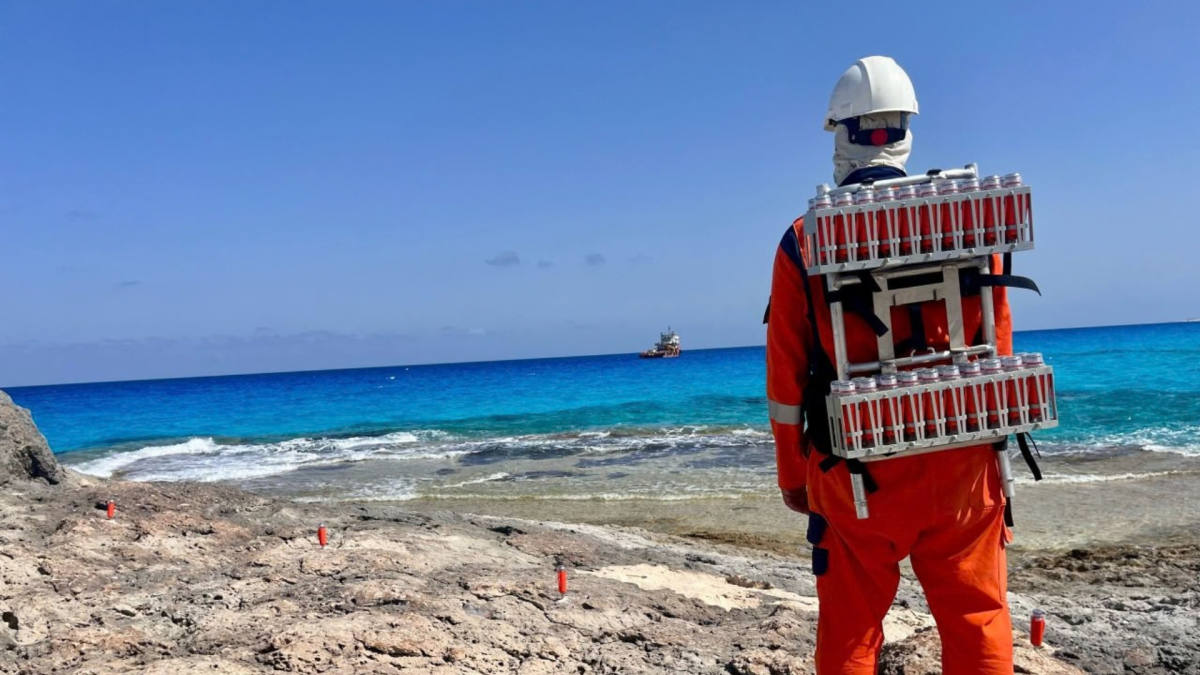
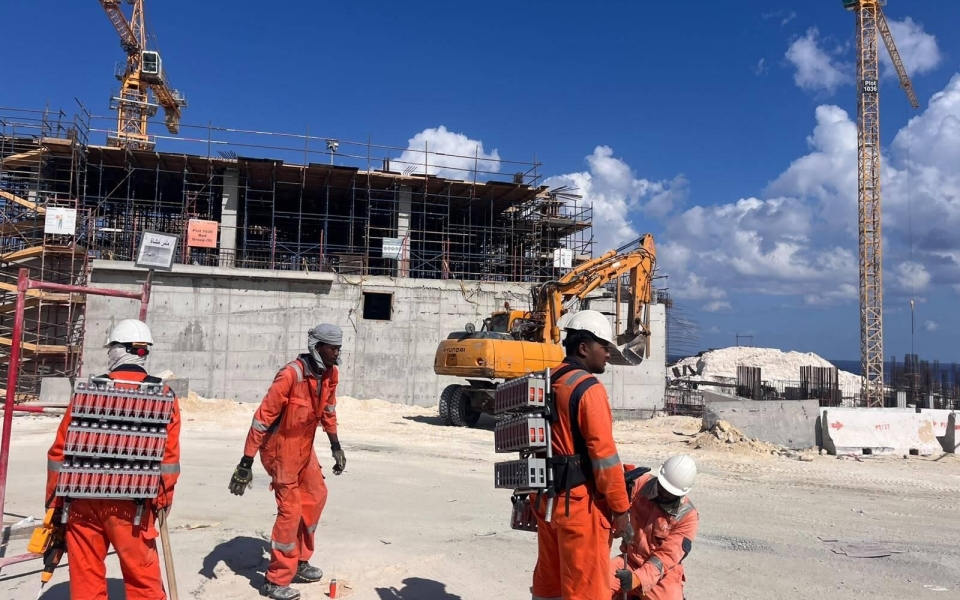
The planned lines crossed a varied coastal environment, from soft sand and disturbed ground to hard limestone outcrops and water-saturated tidal areas. Acquisition also had to take place alongside ongoing construction activity, requiring coordination with site teams and flexibility in the field.
STRYDE field support expert Bogdan Nicolescu joined Fugro Egypt to help the crew prepare for and carry out a passive seismic survey supporting a major coastal construction project. Working alongside the team at its temporary base and out in the field, he provided hands-on training and practical support, from system setup and node preparation to deployment, retrieval and data delivery.
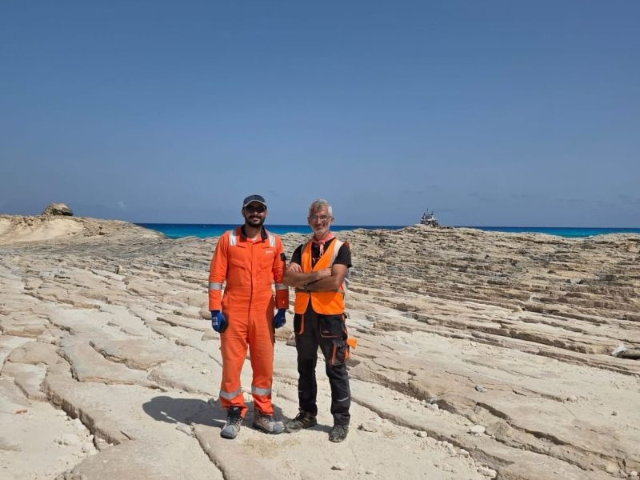
Bogdan helped set up the STRYDE system at a temporary base in Marsa Matrouh and supported initial node charging and preparation. Working alongside the Fugro team, he guided the practical steps needed to move from initial setup into daily acquisition.
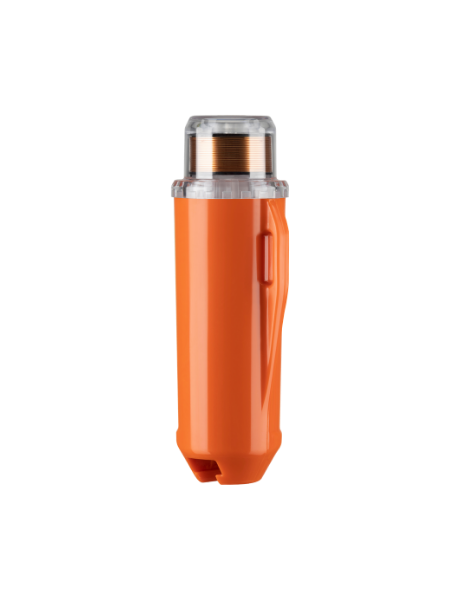
Nodes were deployed using STRYDE Navigator, while the contractor surveyor independently measured receiver positions. This gave the crew hands-on experience of managing node deployment alongside the survey’s positioning requirements.
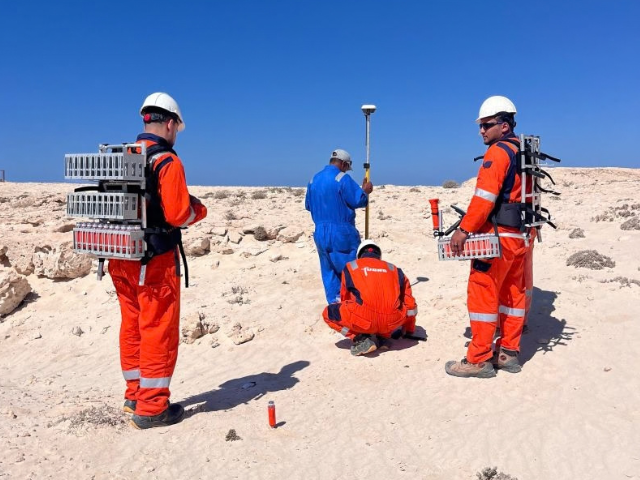
Ground conditions presented one of the main operational challenges. Installation methods had to change as the crew moved between sandy areas, disturbed soil and exposed limestone.
STRYDE supported the team as it adapted its approach and sourced additional digging and drilling tools locally. In hard limestone areas, the crew drilled holes to install nodes on spikes. Sand was also brought to some locations to help cover the nodes.
These practical adjustments formed an important part of the crew’s learning: understanding how ground conditions affect installation and how to adapt deployment methods accordingly.
The busy construction site required ongoing coordination. Fugro worked with site managers to restrict access around deployed lines where possible, helping reduce interference from earthmoving equipment.
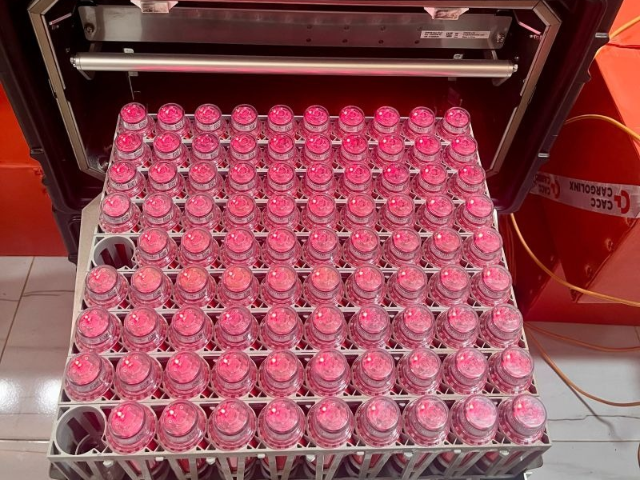
The short recording periods allowed the crew to complete deployment, recording and retrieval within the same day.
Nodes were deployed in the morning and typically left to record for three to five hours before retrieval in the afternoon. Data harvesting followed in the evening, connecting each day’s field activity with the next stage of data handling.
Bogdan helped the team put this workflow into practice, supporting node preparation, deployment, retrieval and harvesting as the survey progressed.
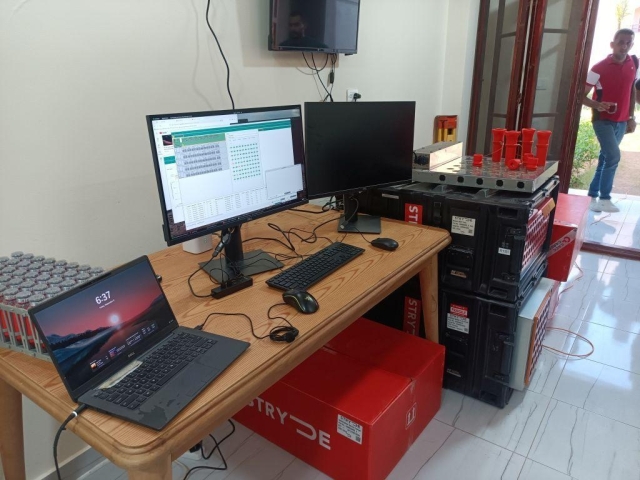
STRYDE’s support also focused on ensuring the crew had everything in place to manage the recorded data, from daily harvesting and backup to transfer for processing.
Working with Fugro’s team, he helped establish a data management workflow aligned with its GroundIQ cloud platform, ensuring data could be organised, backed up and shared with processing specialists.
Data was retained on the nodes until successful transfer had been confirmed, providing an additional safeguard throughout the process.
“The STRYDE nodes proved to be a highly effective solution for passive seismic acquisition at a Fugro Egypt project. Their reliability, ease of deployment, and adaptability to challenging and variable ground conditions enabled us to efficiently acquire high-quality data while maintaining productivity in a complex construction environment. The overall system performed exceptionally well and supported the establishment of a smooth and repeatable acquisition workflow.
"In addition, working alongside Bogdan was a valuable experience for our team. His hands-on approach to training, strong technical expertise, and commitment to knowledge transfer allowed our geophysicists to rapidly gain confidence in all aspects of the acquisition process. The practical guidance he provided, both in the field and during data management activities, ensured a successful project start-up and equipped our team with the skills required to continue operations independently.”

Mahmoud Hafez
Geophysicist and Project Manager, Fugro

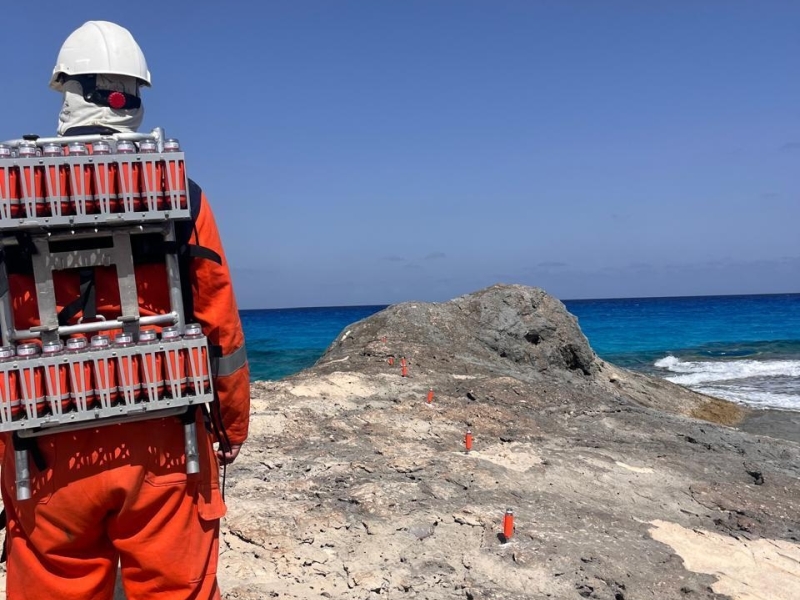
By the time STRYDE completed the on-site support, the crew had gained practical experience across the acquisition workflow, from preparing nodes and adapting installations to different terrain through to retrieving equipment and transferring data.
The team continued acquisition after his departure.
For Fugro Egypt, this support helped establish the skills and workflows needed to keep the survey moving.
For STRYDE, working alongside customers provides an equally valuable opportunity to see the technology in everyday use, gather direct feedback and understand the practical challenges crews face.
These field experiences help inform product development, training and support, ensuring that lessons from real operations feed back into how STRYDE serves its customers.
“The Fugro engineers on site were a pleasure to work with, helpful, collaborative and eager to learn. They brought enthusiasm to every training session and took a hands-on approach to getting to grips with the STRYDE system.
“A special thank you to Fugro geophysicists Ahmed Tawfiq and Abdullah Elshafey, whose support and willingness to share their knowledge helped get the crew up and running. It was a team effort from start to finish.”

Bogdan Nicolescu
Senior Geophysicist