


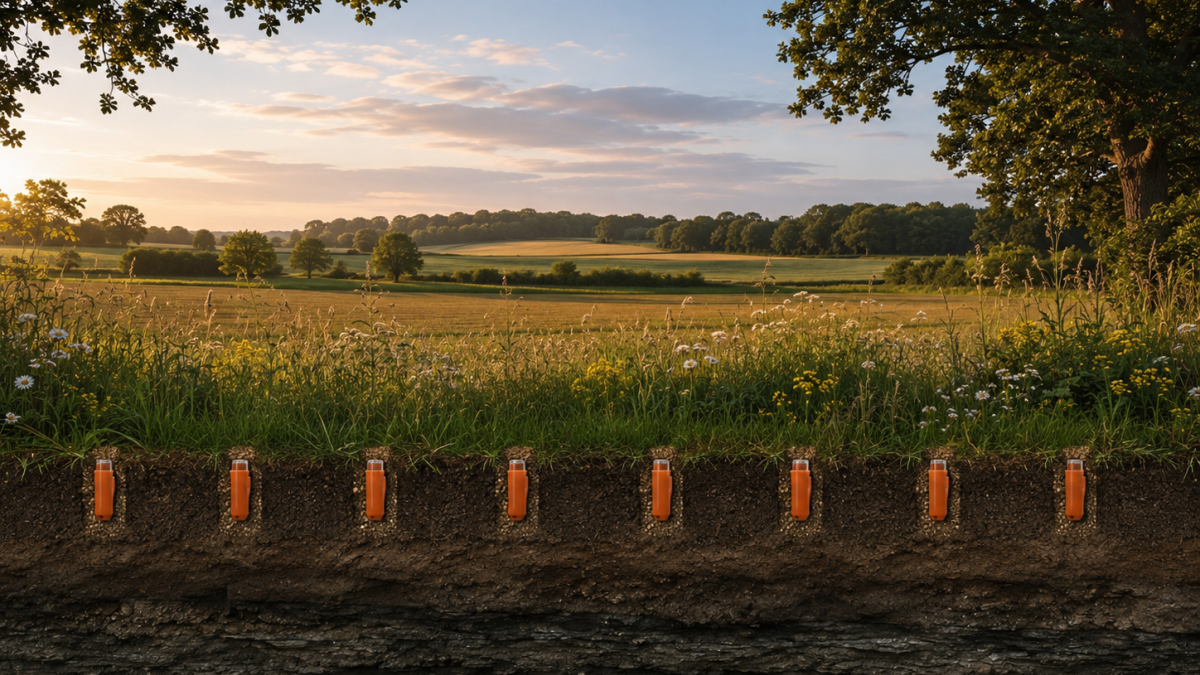
Hydrogen
Customer presentation
A month-long field study in southwestern France explored the potential of STRYDE Range+ nodes for passive seismic imaging below their nominal 1 Hz frequency limit. Using 90 nodes across 50 km², researchers recovered reliable ambient noise signals down to 0.5 Hz, with strong repeatability and close agreement with reference sensor data. The findings highlight new opportunities for cost-efficient ambient noise tomography and subsurface monitoring alongside active seismic exploration.
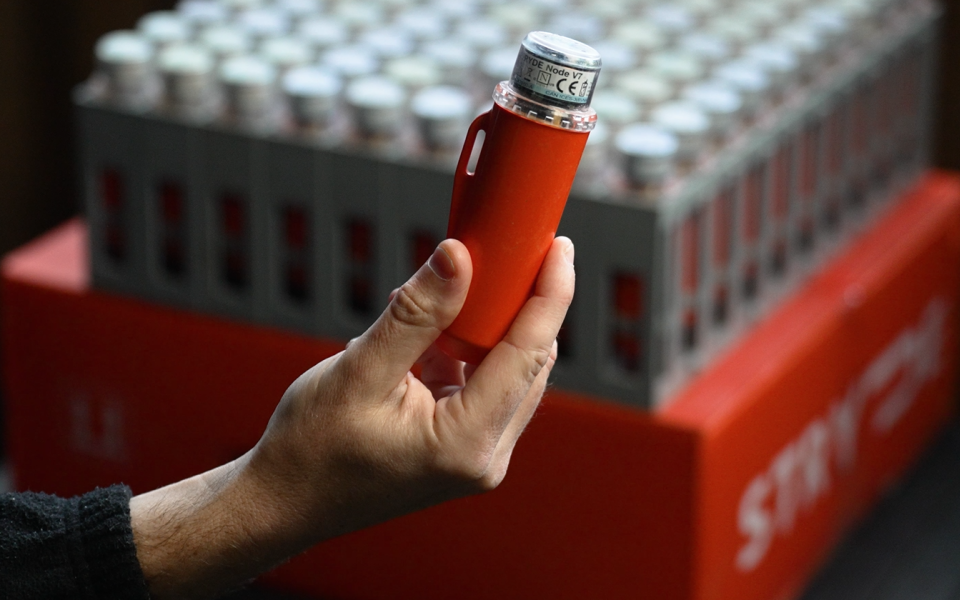
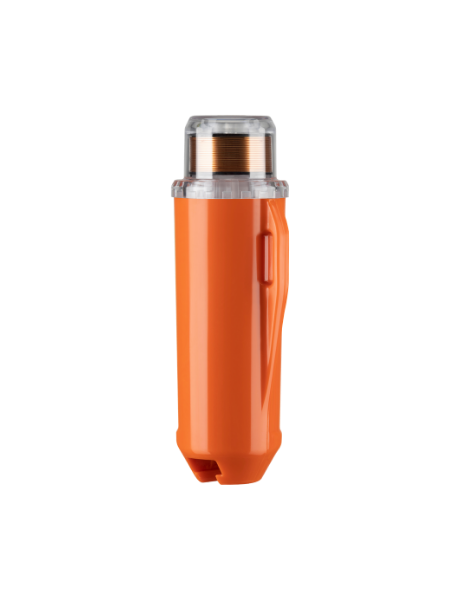
Field results demonstrated usable ambient noise recordings below the nodes’ nominal 1 Hz limit, extending their potential for low-frequency passive imaging.
Cross-correlations in the 0.5–1 Hz band revealed clear surface-wave arrivals at apparent velocities of 1,000–1,300 m/s, the signals needed to support tomographic imaging.
Virtual shot gathers closely resembled those from Sercel WTU reference sensors at the same sites, recorded during a different period, supporting confidence in the recovered signals.
Co-located nodes produced nearly identical correlations, demonstrating repeatability and sensor consistency in the targeted low-frequency band.
Of 90 deployed nodes, 89 recorded continuously throughout the experiment. Extended recording enabled weeks of stacking to suppress uncorrelated electronic noise.
The findings support using compact STRYDE nodes for ambient noise tomography, creating opportunities to complement active seismic surveys with passive subsurface imaging.

Learn more →

Learn more →

Learn more →