


Environmental seismology
Environmental research results presented by Mark Ireland, Hector Barnett, Abdullah Kahraman and Charles Dunham
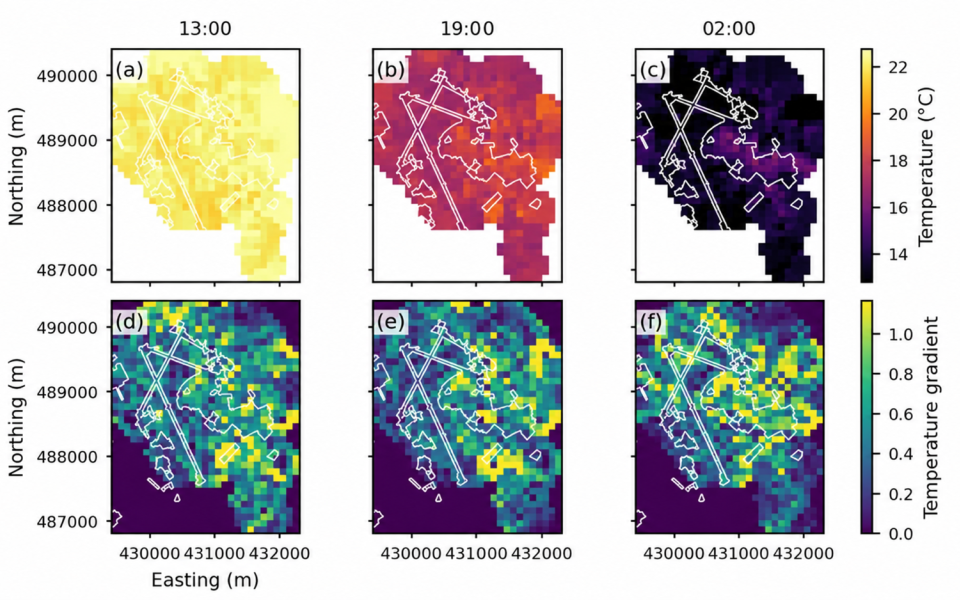
Researchers at Newcastle University used temperature sensors embedded within more than 3,000 nodal seismometers to investigate local temperature variations during the July 2022 UK heatwave. Deployed across 6 km² in North Yorkshire, the network collected over 80 million readings over 34 days.
After correcting the readings against local meteorological observations, the researchers identified mean temperature differences of up to 3.6°C over just 100–200 metres, with extreme contrasts exceeding 17°C during peak heating. The study demonstrates how seismic instruments could also support detailed environmental monitoring, helping researchers understand heat exposure across ecosystems, the built environment and critical infrastructure.

Monitoring during the July 2022 heatwave
Embedded sensors repurposed for temperature monitoring
A dense network capturing local temperature variations
Temperature measurements recorded every 100 seconds
Capturing temperature changes across day and night
Extreme spatial differences during peak heating