


Oil and gas
Technical presentation
Presented by Nicolas Goujon, CTO at STRYDE, at the EAGE Annual Conference in Aberdeen, 2026.
Rotation and spatial-gradient recording have long shown promise for improving land seismic data, particularly by attenuating ground roll, suppressing scattered noise and supporting wavefield reconstruction. Yet despite encouraging field trials, these techniques have never achieved widespread commercial adoption.
In this presentation, STRYDE CTO Nicolas Goujon examines why conventional rotational sensors remain impractical for large-scale land surveys and proposes a more commercially viable alternative: calculating wavefield gradients using closely spaced pairs of standard vertical seismic nodes.
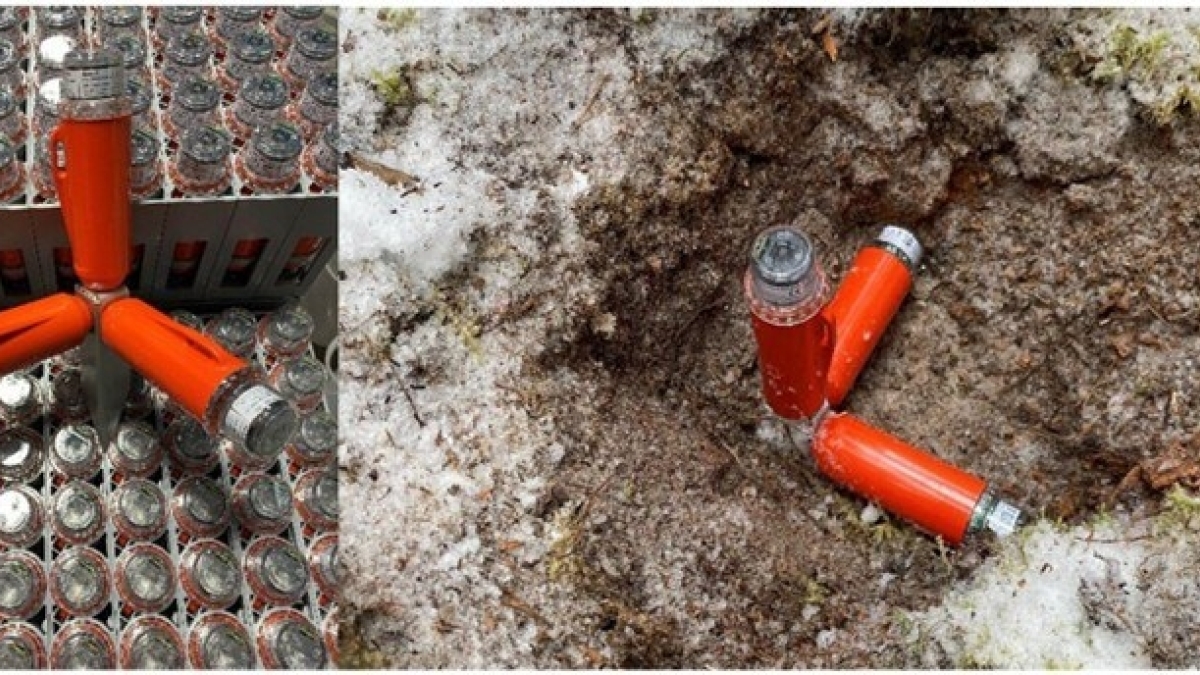
The presentation introduces a five-node cross geometry that can be deployed using existing 1C equipment to generate conventional array outputs alongside first and second spatial derivatives of the wavefield. This approach could provide powerful local noise models, improve signal and noise separation, support compressive sensing and enable large-scale gradient acquisition without investment in specialist receiver technology.