


Oil and gas
Nicolas Goujon:
How much does the way a seismic node is planted influence the data it records?
This technical presentation from STRYDE's Chief Technology Officer, Nicolas Goujon explores how burial affects ground coupling, tilt, noise and field operations. Drawing on published research and operational examples, it explains why good sensor performance depends on stable contact with the ground - and how burial can improve recording conditions while protecting nodes during acquisition.
The presentation makes the case for burying nodes wherever practical, balancing the additional deployment effort against benefits for data quality, equipment protection and operational efficiency.
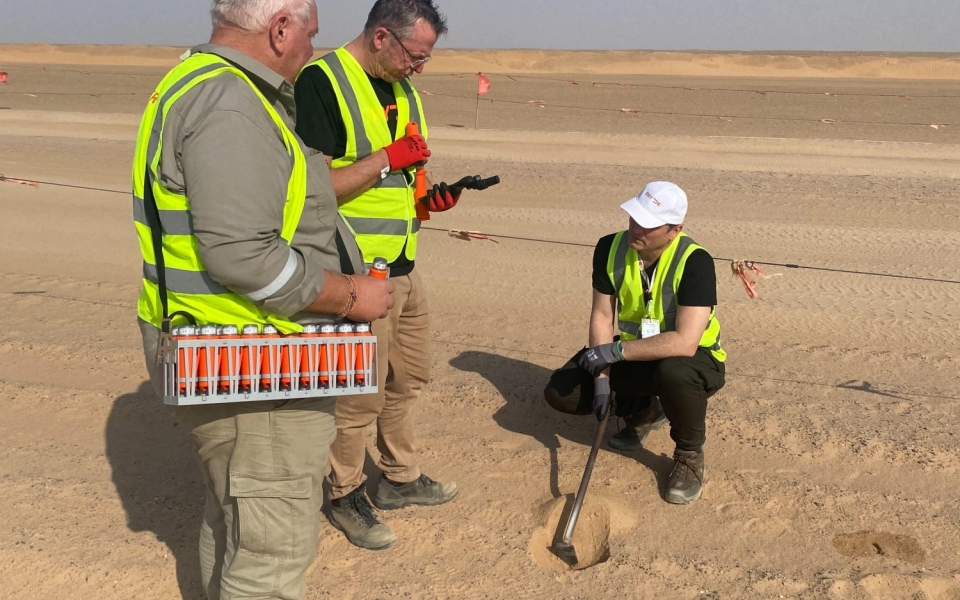
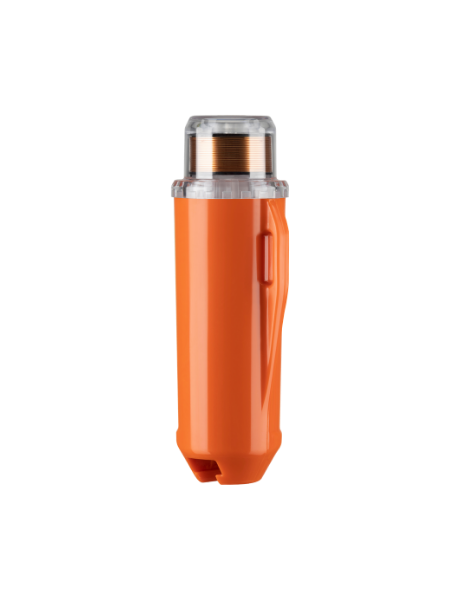
Burial helps stabilise the sensor and improve ground coupling, reducing amplitude and phase distortions associated with poor planting.
A 10° tilt allows approximately 17% of vertically propagating shear-wave amplitude to enter the recorded component, reinforcing the importance of a vertical plant.
Burial shields the housing from direct wind and particle impacts, while wind-generated surface-wave noise attenuates with depth.
Burial attenuates airborne and surface-wave noise from vehicles, crews and industrial activity, particularly at higher frequencies.
Buried nodes are less exposed to interference from people and animals, and less likely to be moved or damaged by vehicles.
The presentation illustrates how buried nodes allow vibrators to travel and operate across the receiver spread without exposed equipment obstructing their movement