


Sponsored PhD Research:
The Natural Environment Research Council (NERC) is sponsoring a PhD at the University of Oxford focused on integrating STRYDE seismic nodes with magnetotellurics to image subsurface fluids with quantified uncertainty, enabling safer decisions at lower cost and reduced environmental footprint.
Sixtine began her PhD at the University of Oxford in 2024, following a BSc in Earth Sciences at ETH Zurich (completed 2022). This PhD is a CASE (Collaborative Awards in Science and Engineering) partnership with STRYDE and NERC - a specific type of UK PhD funding model.
It’s a scheme designed to bring universities and industry together on applied research.
Supervisors: Paula Koelemeijer, Andrew Curtis, Mike Kendall.
Better subsurface decisions start with a better understanding of uncertainty.
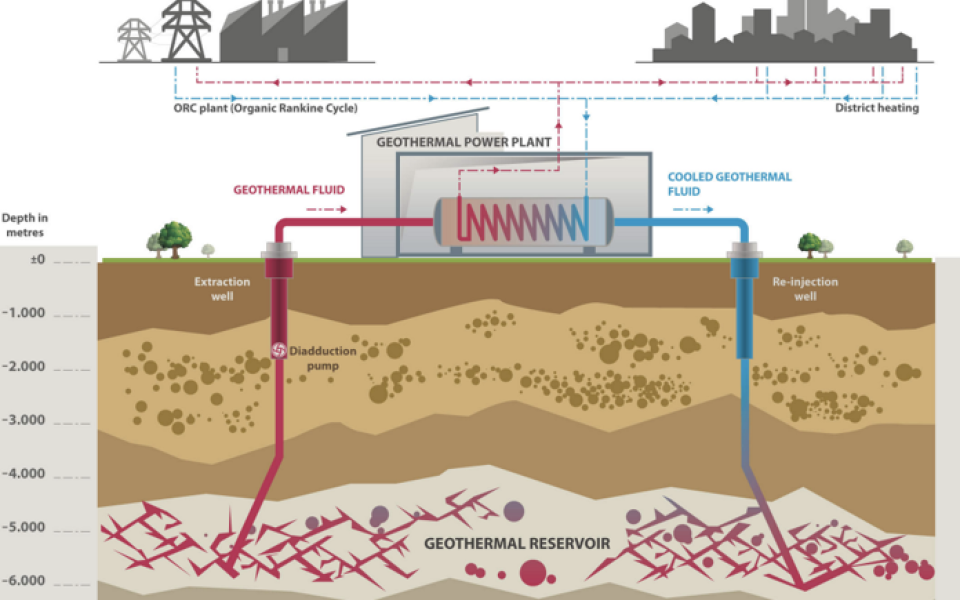
In geothermal exploration, subsurface fluids drive performance - but imaging fluids is difficult because different subsurface conditions can produce similar geophysical signatures (the “non-uniqueness” challenge).
This project tackles that challenge by developing a workflow that uses passive seismic and magnetotelluric (MT) sources, and explicitly accounts for uncertainty so operators can interpret results with greater confidence.
How can we make geothermal exploration for fluid detection cost effective using only passive seismic + MT sources?
How can seismic node data be used for passive seismic - and can ambient noise tomography provide lower-uncertainty models than body-wave tomography from microseisms?
How can we jointly infer permeability using seismic velocity and resistivity models?
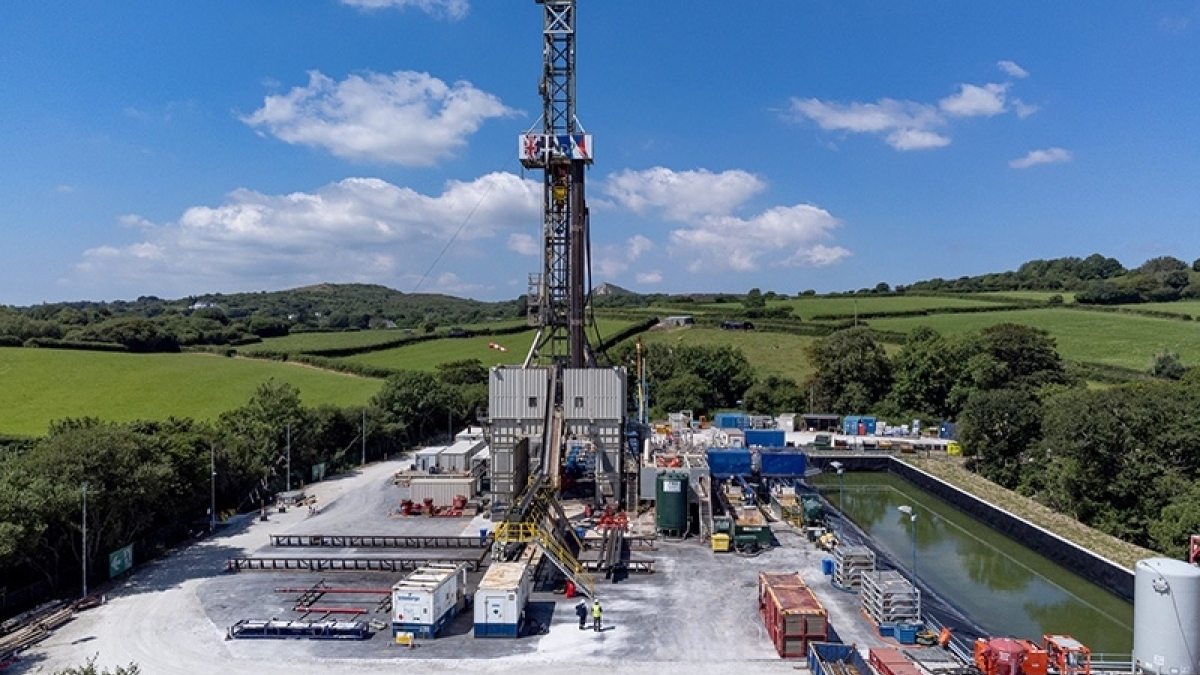
The workflow is being developed and applied to a geothermal site in Cornwall, building on previous research and observations (including node array performance for detecting microseismicity and extracting structural information).
Geophysical inversion is often non-unique and affected by measurement error and resolution limitations.
This project uses Bayesian inference to produce a posterior distribution - a statistical description of model parameters given the data, rather than a single “best” model.
Traditional Monte Carlo sampling is computationally expensive. The project evaluates faster approaches such as:
Variational Inference
Stein Variational Gradient Descent
Normalising Flows / Flow Matching
Outcome: faster model updates + uncertainty quantification that supports operational decision-making.
STRYDE is committed to advancing subsurface imaging beyond data acquisition.
By helping to enable this PhD research, we are supporting the development of workflows that integrate dense passive seismic node data with Bayesian uncertainty quantification.
This collaboration ensures STRYDE remains at the forefront of next-generation imaging techniques - enabling faster, more confident subsurface decisions.
Expected outcomes:
✅ A repeatable workflow to image geothermal systems using passive seismic + MT
✅ Quantified uncertainty maps that improve decision confidence
✅ Comparative results: ambient-noise vs body-wave tomography uncertainty
✅ Early-stage pathway toward permeability constraints from joint inference
Sixtine will be presenting on "Probabilistic body wave tomography in a geothermal setting in Cornwall" at the following 2026 events: