EH

Podcast:

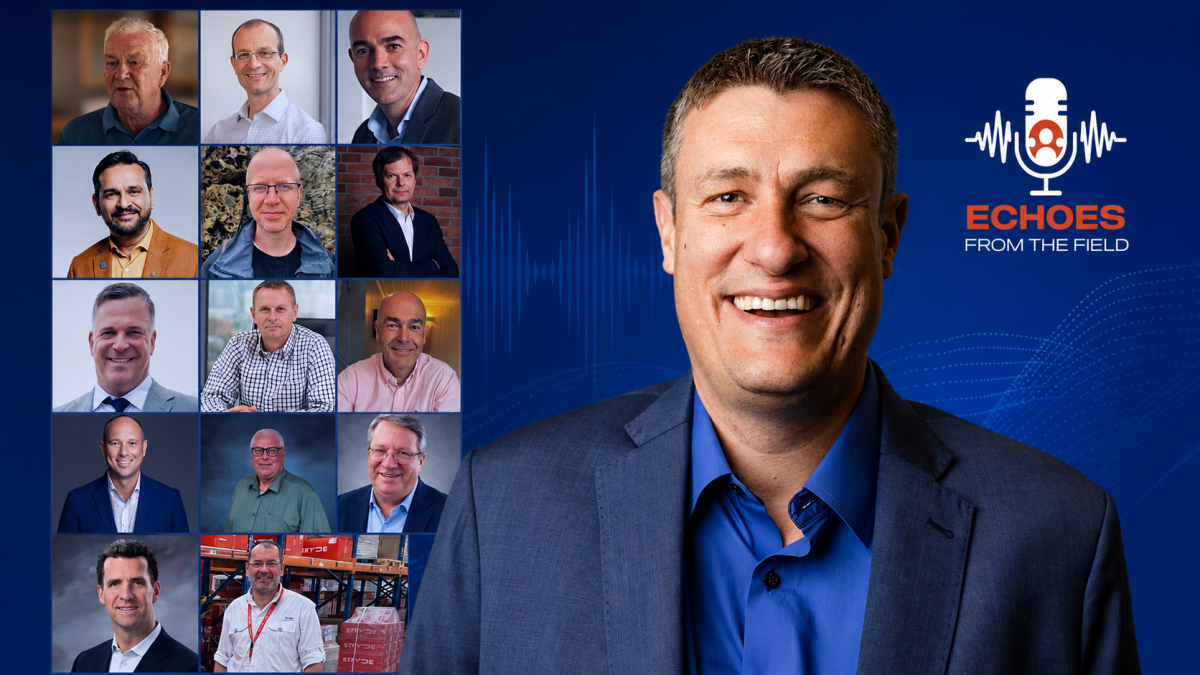
Echoes from the Field

The podcast exploring the people, technologies and experiences shaping land seismic

Listen now
the good, the bad, and the ugly

Inside modern land seismic campaigns: real stories, real challenges, real innovation

Echoes from the Field is a video series hosted by STRYDE’s CEO, Mike Popham, bringing you unscripted, real-world insights from the forefront of land seismic data acquisition.

episode 1

Bill Mooney - Polaris Seismic

With an unwavering commitment to customer success, CEO Bill Mooney and the team at Polaris Seismic have contributed to numerous world-class discoveries across Africa and beyond.

In this episode of our Echoes from the Field series, STRYDE CEO Mike Popham sits down with Bill to go behind the shot and explore:

  • The origin story of Polaris Seismic and their vision for the future

  • The day-to-day challenges faced by crews operating in some of the world’s toughest environments

  • How Polaris invests in local communities, creating sustainable benefits and a lasting positive legacy

  • Best practices and lessons learned from delivering seismic campaigns across Africa and Pakistan

  • How STRYDE technology has transformed survey efficiency and elevated data quality across their projects

episode 2

Andrew Lewis & Bruce Karr - Fairfield Geotechnologies

For years, operators in the Delaware Basin faced the same frustrating reality: complex near-surface geology made deep reservoir imaging unreliable. Many eventually gave up, concluding “Seismic can’t help us here.”

In this episode of our Echoes from the Field series, STRYDE CEO Mike Popham sits down with Fairfield’s geoscience experts, Bruce and Andrew, to go behind the shot and unpack:

  • What Fairfield is doing in the Permian and the imaging challenges they’ve encountered

  • Insights from the ultra-high-density seismic survey they acquired - and how improved near-surface sampling transformed their ability to illuminate the reservoir

  • A comparison of the three receiver technologies used during the survey and how each influenced data quality

  • Key lessons learned and how these insights are shaping their plans for future exploration

episode 3

Chris Einchcomb - Ex bp and Rosneft

High-resolution land seismic acquisition was previously constrained by cost, crew size, and practical limits on density. Real-time QC was often seen as a “necessity”, and high-density surveys were considered unrealistic for many.

In this episode of our Echoes from the Field series, Mike Popham sits down with former Exploration Manager and land seismic contractor Chris Einchcomb to unpack:

  • The real-world operational challenges that led Chris to get involved in STRYDE’s development when he was at Rosneft

  • Why real-time QC is no longer required for modern land seismic acquisition

  • Lessons learned from the field
  • How these advances are enabling true quantitative geophysics and opening new opportunities for the next generation of geophysicists and explorers to visualise the subsurface more accurately, efficiently, and confidently

episode 4

Jacek Słowiński - Geopartner Geofizyka

Land seismic acquisition in Europe has evolved rapidly in recent years, driven by tighter budgets, new energy priorities, and growing expectations around data quality and efficiency.

In this episode of our Echoes from the Field series, we sit down Jacek Słowiński to explore:

  • How land seismic in Europe is adapting to new market and energy transition demands
  • The key trends shaping oil & gas, geothermal, civil, and mineral projects
  • What end users now expect in terms of resolution, speed, and cost efficiency
  • How Geopartner is staying competitive with innovative acquisition strategies
  • How using STRYDE enables higher-density data, faster deployment, and more affordable surveys
  • And how this is unlocking new growth opportunities for Geopartner
Episode 5

Alex Richter - ThinkGeoEnergy

Geothermal energy is gaining renewed global attention as countries accelerate the transition to low-carbon, secure, and scalable energy solutions. Yet significant challenges remain around policy, financing, data availability, and public awareness.

In this episode of our Echoes from the Field series, we sit down with Alexander Richter, founder of ThinkGeoEnergy, to explore:

  • The evolution of geothermal hotspots and how the global market has matured
  • The realities and challenges of developing geothermal projects
  • The main barriers to scaling geothermal as a mainstream energy source
  • Success stories that demonstrate geothermal’s long-term potential
  • The critical role of high-quality seismic data in reducing risk and improving project viability
  • Why policy support, financing structures, and accessible subsurface data are essential to accelerate development
Episode 6

Claudio Strobbia - realtimeseismic

Drawing on decades of field experience, Claudio Strobbia, CEO of realtimeseismic, challenges common misconceptions in seismic acquisition and shares what success truly looks like from a geophysicist’s perspective.

In this episode of our Echoes from the Field series, we explore:

  • Why high-density 3D surveys have become the industry standard, and when they matter most
  • How to balance productivity with high-resolution data while avoiding common design pitfalls, even in urban environments
  • How modelling and illumination analysis help de-risk survey design and improve outcomes
  • The impact of modern source and nodal technologies on data quality, uptime, and efficiency
  • How you can future-proof seismic data for emerging technologies and evolving workflows
  • What’s next for seismic, including the role of automation, AI, and the changing geophysicist role
Episode 7

Halim Sedat Başar - HSB Energi

Türkiye’s complex tectonics, faulted geology, challenging terrain, and variable near-surface conditions can make high-resolution seismic imaging difficult to achieve.

In this episode, Halim Sedat Başar from HSB Enerji discusses what it takes to acquire reliable onshore seismic data in Türkiye and unpacks:

  • How Türkiye’s complex geology influences seismic survey design and subsurface imaging
  • The most challenging geological settings to image, and the impact of noise, statics, and near-surface conditions
  • How receiver density, offsets, and azimuth coverage can be optimised to improve imaging quality
  • The limitations of conventional seismic acquisition, and how modern nodal systems can help overcome them
  • The value of high-density seismic data in improving interpretation confidence
  • Future opportunities for seismic across Türkiye’s oil and gas, mining, and geothermal sectors
Episode 8

Mark Rees - Echo Geo Ltd

High-resolution site investigation and urban geothermal surveys are increasingly important across the UK market, but must be delivered quickly, discreetly and cost-effectively, while capturing the data density needed for high-quality imaging.

In this episode, Mark Rees, Operations Director at Echo Geo Ltd, unpacks:

  • How lean, high-resolution site investigation surveys help civil engineers and investors better understand subsurface risk
  • The realities of urban geothermal surveys in UK cities and towns
  • Insights from the UK’s largest 3D seismic survey for geothermal exploration in York, where high-density data identified a target not predicted by legacy 2D seismic
  • How compact, deployment-ready seismic systems really help small teams mobilise quickly, reduce vehicles, shorten survey duration and acquire high-quality data at lower cost
  • Why Mark chose STRYDE as his ready-to-deploy seismic system
Episode 9

Allan Châtenay - Explor

With unmatched hands-on experience deploying STRYDE technology across some of the most challenging environments on Earth, Explor have pushed the limits of what’s possible in land seismic acquisition.

In this episode of our Echoes from the Field series, STRYDE CEO Mike Popham sits down with Explor President, Allan Châtenay to go behind the shot and explore:

  • What it meant to become the first commercial user of STRYDE in the Western Hemisphere - and why it marked a career-defining “this changes everything” moment
  • Exclusive project insights never shared before, including a high-density 2D Vibroseis survey in the US delivered with just three people
  • How using new technology in new ways is unlocking even greater operational efficiencies across seismic acquisition projects
  • The survey designs helping teams see things they have never seen before, revealing new levels of subsurface detail and understanding
episode 10

Prof. James Hammond - Birkbeck University

Seismology is entering a new era, driven by dense nodal arrays, larger datasets, and advances in AI.

In this episode, we sit down with Professor James Hammond, a leading environmental seismologist to explore how these developments are expanding what’s possible in Earth science and discuss:

  • How seismology differs from conventional reflection seismic
  • The wider applications of seismic data beyond earthquakes and volcanoes
  • How Large-N arrays and STRYDE technology are enabling more ambitious research
  • The potential of AI and dense seismic networks for hazard monitoring and early warning
  • How shared facilities such as LENS UK can improve access to modern seismic instrumentation
  • How James thinks we can inspire the next generation of Earth scientists
episode 11

Max Brouwers - Getech

In this episode, we sit down with Max Brouwers, former Shell exploration leader and now Chief Business Development Officer at Getech, to explore how operators can better understand subsurface risk, high-grade opportunities, and focus investment where it can create the greatest value. We discuss:

  • Why operators should “measure twice, cut once” before committing to new data acquisition
  • The most important questions to answer before designing and acquiring a seismic survey
  • How smarter screening can replace broad, sparse acquisition with more targeted, higher-quality seismic
  • What the most successful companies in emerging energy sectors value when making subsurface investment decisions
  • The importance of maintaining an exploration mindset — and why “absence of evidence is not evidence of absence”
  • Lessons from Max’s time at Shell on aligning technical teams, executives, governments and partners around subsurface risk and opportunity
episode 12

Sandeep Kumar Chandola - PETRONAS

In this episode, we sit down with Sandeep Kumar Chandola, who has led geophysics teams at PETRONAS for several years, to explore how smarter survey design, faster turnaround and scalable acquisition can increase the value of seismic data. We discuss:

  • Why timely data can be more valuable than perfect data delivered too late
  • How modern survey design can support both exploration and development for years to come
  • The gap between new seismic data and geological or reservoir models
  • The QC information that matters most during acquisition
  • Sandeep’s vision for a seamless, scalable land seismic system
  • How seismic can support both hydrocarbon exploration and CO₂ storage
  • Why higher-density nodal acquisition does not have to mean proportionally higher cost

Discover more about what we do